Ash Blonde Hair Color: Who It Suits and How to Maintain It
Every colourist has a version of this story. Someone sits down, opens their phone, and shows a photo of a model with that cool, smoky, almost silvery blonde. Then they say the thing that makes the colourist’s heart sink slightly: “and I don’t want to be in here more than twice a year.”
I’ve been that person. Not the colourist, the one with the phone.
Ash blonde is genuinely one of the most beautiful colours you can have. It’s also one of the most demanding, and almost nobody tells you that part before you commit. Not because stylists are hiding it, but because the conversation happens fast and you’re already excited and nodding.
So let’s do the conversation properly, with no rush. What ash blonde actually is, whether it’s going to suit your face, what it takes to keep it looking the way it did when you walked out, and whether that’s a trade you want to make.

What Ash Blonde Actually Means
This trips a lot of people up, so it’s worth being clear before anything else.
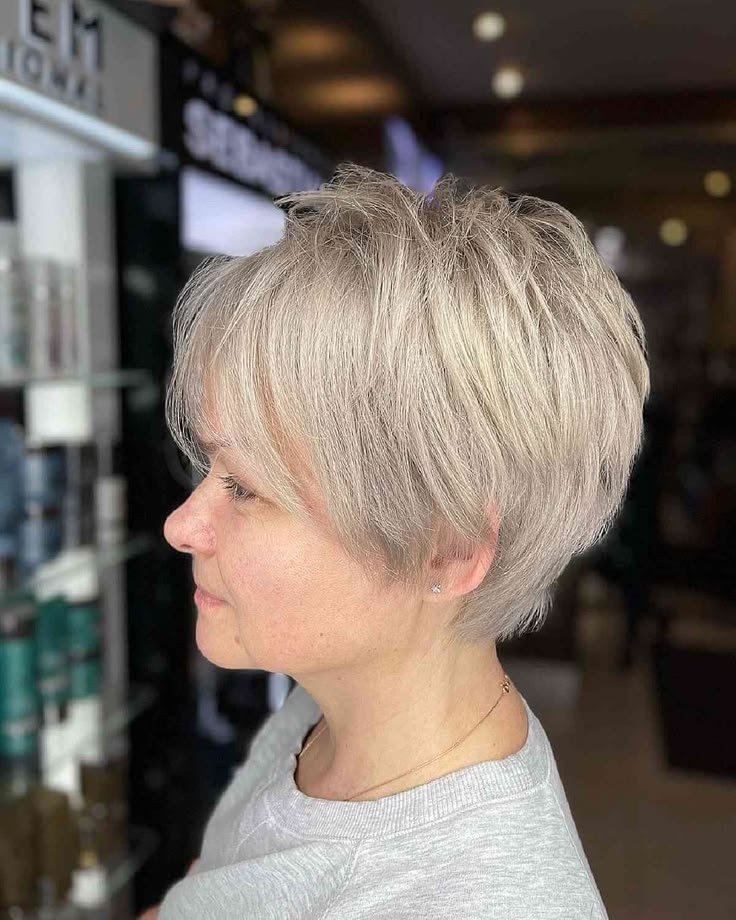
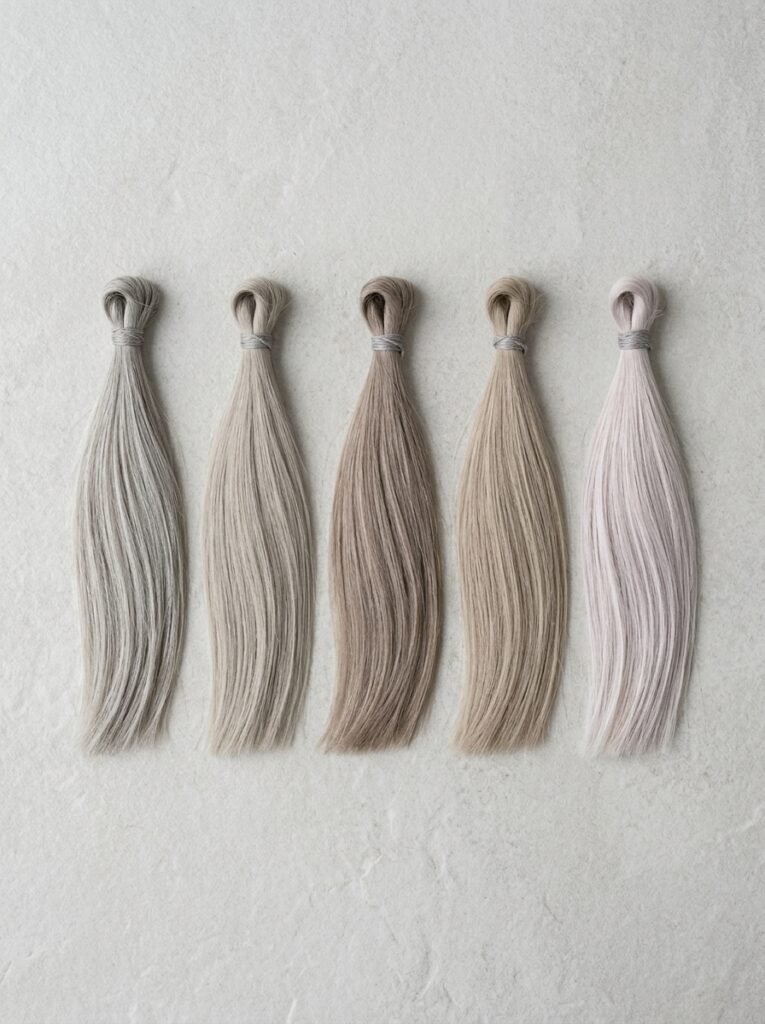
Ash blonde is not a specific shade. It’s a tonal family. Any blonde can be ash, from very pale to quite dark, and what makes it ash is the absence of warmth rather than the level of lightness.
Regular blonde carries gold, honey, caramel and copper tones underneath. Ash blonde has those tones deliberately cancelled out, leaving something cooler and greyer. Depending on the formulation there can be violet, blue or even a touch of green in the toner doing that cancelling work.
The practical result is a blonde that reads cool and slightly smoky rather than sunny.
Some terms you’ll hear that all live in the same neighbourhood:
- Ash blonde is the umbrella term for any cool toned blonde
- Beige blonde sits closer to neutral, with a whisper of warmth kept in
- Mushroom blonde is a darker, greyer take that’s had a good run in recent years
- Smoky or silver blonde goes further into grey territory
- Platinum is about how light it is, not how cool, though most platinum is also ash toned
Worth knowing because “I want ash blonde” can mean five different things to five different people, and showing photos beats using words in the salon every time.
The Part Nobody Mentions Until You’re Sitting There
I’m putting the difficult bit early rather than burying it under a pile of inspiration.
Ash blonde fades faster and less gracefully than almost any other colour. Not because the product is bad, but because of what’s happening underneath.
When hair is lightened, it goes through a predictable sequence. Dark hair passes through red, then orange, then yellow as more pigment is removed. Those warm pigments don’t vanish. They’re the natural underlying tone of your hair, and lightening simply exposes them.
An ash toner sits on top and neutralises that warmth. It’s doing a cancelling job, not a permanent one. Toner is semi permanent by nature, so it washes out over roughly four to eight weeks, and as it goes, the warmth underneath comes back through.
Which is why ash blonde has a reputation for turning brassy. It isn’t turning into anything. The orange was always there, politely covered up, and now the cover has washed away.
This means real commitment. Realistically:
- A toning or gloss appointment every six to eight weeks
- Root work every eight to twelve weeks if you have regrowth
- A colour safe routine at home that you actually stick to
- A first appointment that may run three or four hours, sometimes longer
If that sounds like a lot, that’s a completely reasonable reaction. Better to know now than to find out in week nine when your hair has gone the colour of a satsuma and you’ve got a wedding on Saturday.
Does It Actually Suit You? Start With Undertone
Here’s where it gets more encouraging.
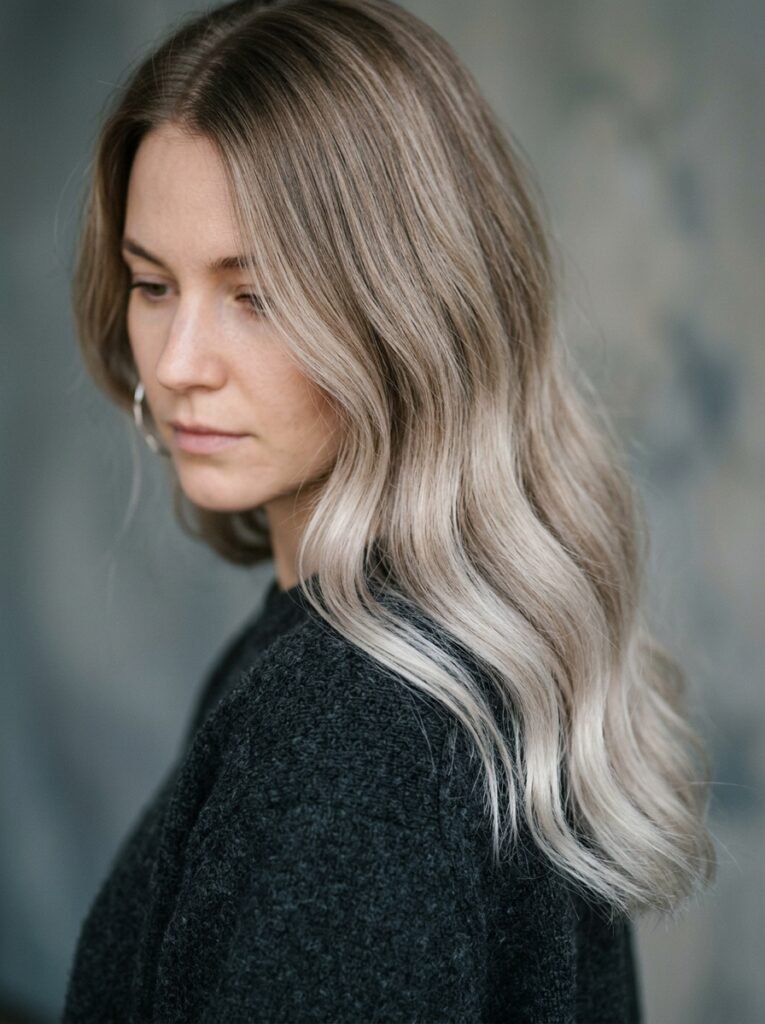
Ash blonde is a cool toned colour, which means it tends to look best on cool and neutral undertones. If your skin has pink, red or bluish undertones, ash blonde will usually sit beautifully against it and can look effortless in a way warmer blondes don’t.
Neutral undertones can generally wear it too, sometimes with a slightly softer version rather than the coolest one available.
Warm undertones, meaning skin with golden, peachy or yellow leanings, are where it gets harder. A very ash blonde against warm skin can drain the colour from your face and make you look tired rather than radiant. Not always, and not for everyone, but often enough to be worth checking before you book.
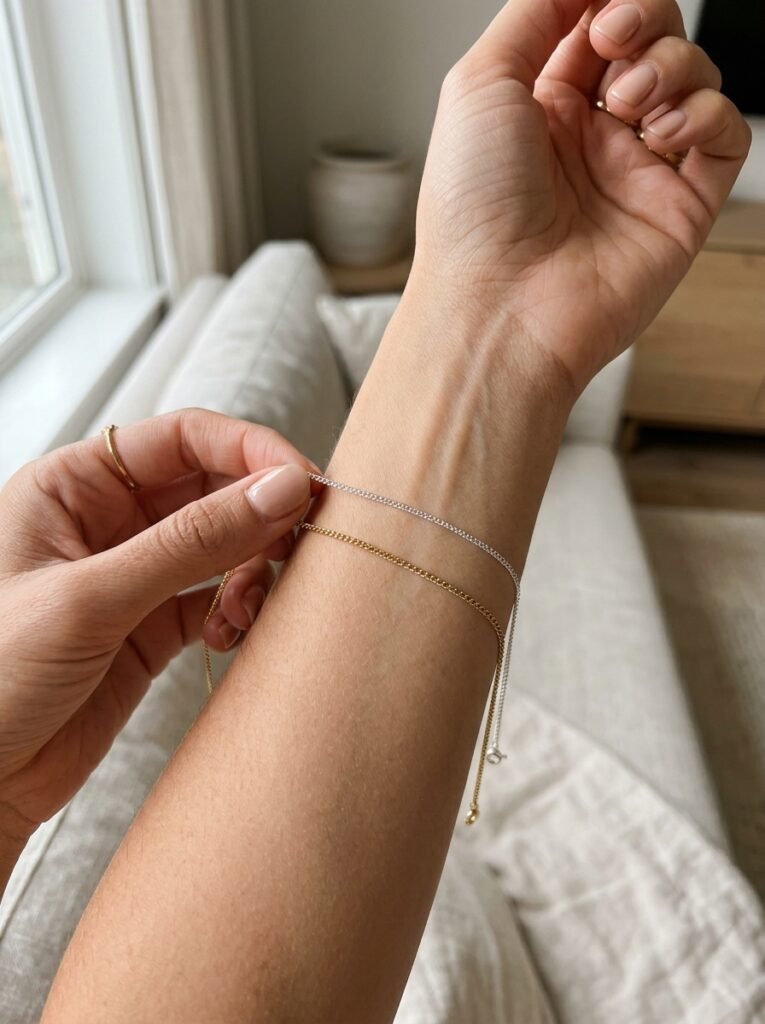
The quickest home test is jewellery. Hold silver up against your face, then gold, in natural daylight. Whichever makes your skin look brighter and more even is pointing at your undertone. Silver suggests cool, gold suggests warm, and if honestly neither looks wrong you’re probably neutral, which is a good position to be in.
There’s a fuller walkthrough of working out whether you’re warm or cool toned if you want to check properly rather than eyeballing it, and it’s worth five minutes before spending several hundred pounds on a colour.
A couple of extra things worth flagging.
On very fair skin, extremely ash tones can sometimes emphasise under eye shadows, because there’s no warmth anywhere in the picture to soften things. A beige leaning ash often works better than a true smoky one here.
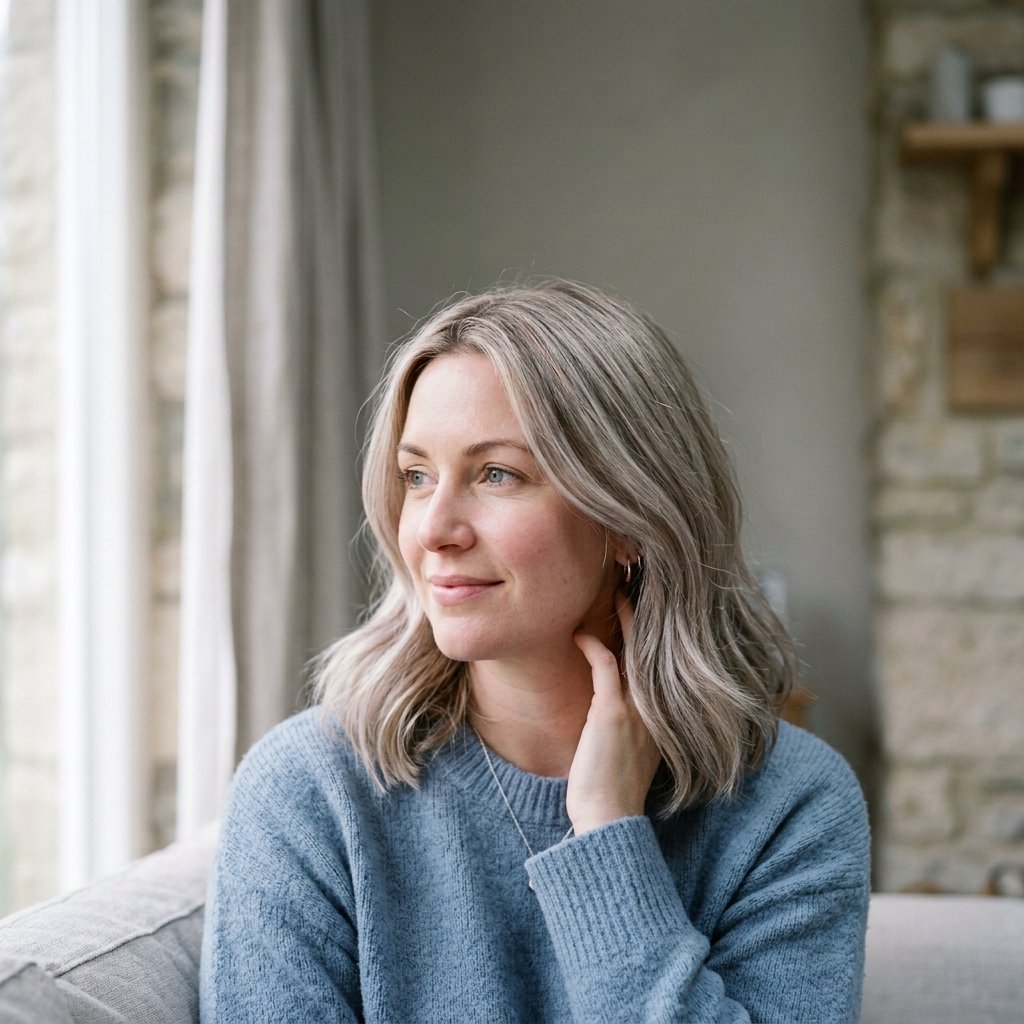
And if you’re going grey, ash blonde is one of the best options available to you. Grey hair is naturally cool, so ash blends into it far more seamlessly than a warm blonde would. The regrowth line is softer and less obvious, which buys you longer between appointments. That’s a genuine practical advantage rather than a nice idea.
Your Starting Point Changes Everything
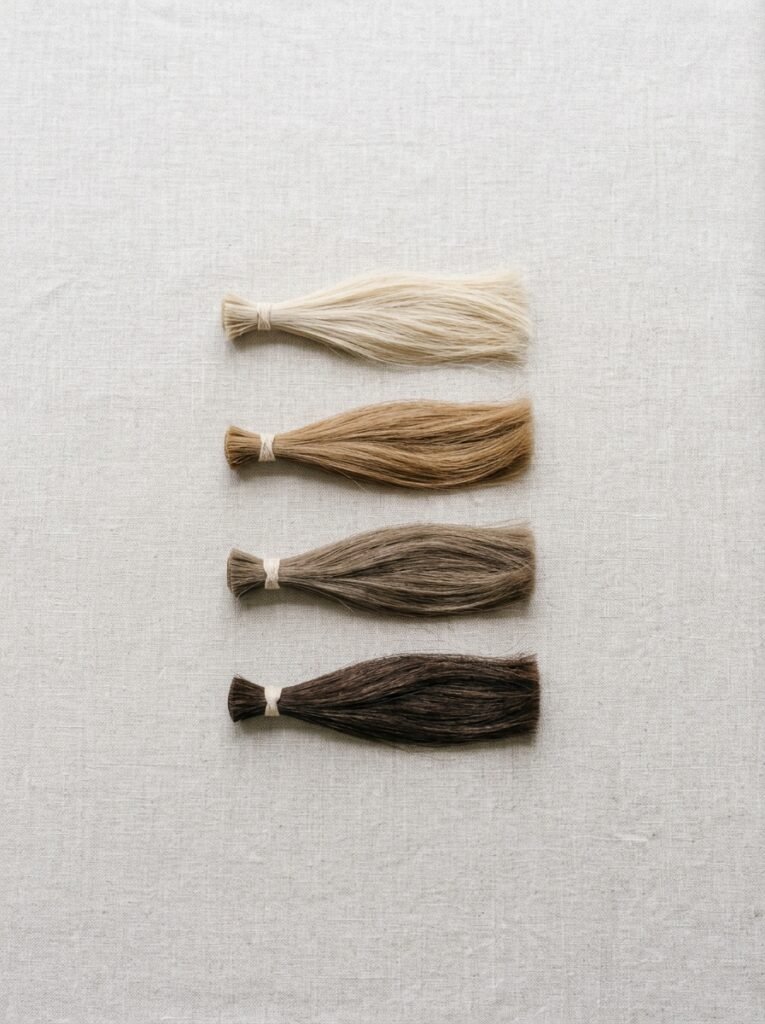
Two people can ask for the same ash blonde and have completely different experiences, and it usually comes down to where their hair started.
If you’re naturally light blonde or already blonde, you’re in the easiest position. Your hair doesn’t need much lifting, so it’s mostly a toning job. Less damage, shorter appointment, lower cost, and the warmth underneath is milder so it takes longer to show through.
If you’re a light or medium brown, it’s achievable but it’s a proper process. Expect lifting, and expect the orange stage to be a real thing your colourist works through. Possibly across more than one appointment if your hair’s condition needs protecting.
If you’re dark brown or black, be prepared for a longer road. Going ash blonde from dark hair usually takes multiple sessions spaced weeks apart, and any colourist who promises it in one sitting without assessing your hair first is a colourist I’d think twice about. The underlying pigment in dark hair is strongly red and orange, so it takes serious lifting to get past, and that’s where damage happens.
If your hair is previously coloured, especially box dyed or with old permanent colour on the ends, tell your stylist before anything else. Colour doesn’t lift colour, and old dye behaves unpredictably. This is the single most common reason results come out patchy.
If your hair is chemically straightened or permed, get a professional opinion first. Stacking chemical processes is where hair genuinely breaks.
Keeping It Cool: What the Routine Actually Looks Like
None of this is complicated. It just has to be consistent.
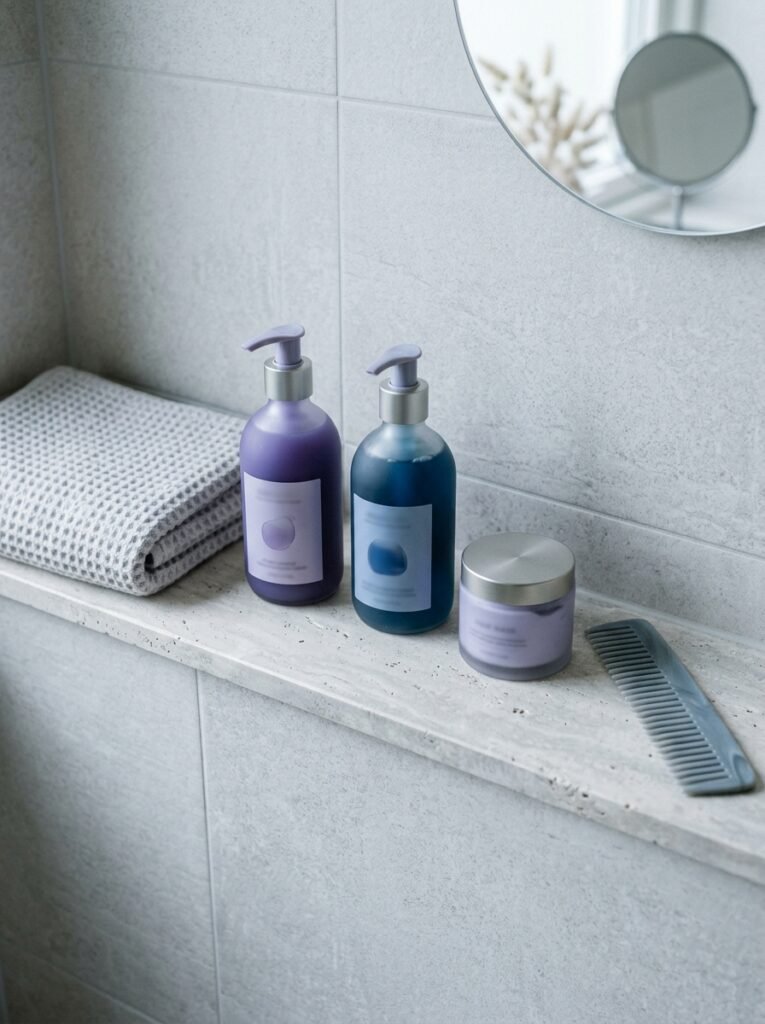
Purple shampoo, but less than you think. Purple neutralises yellow, which is what fades through on lighter ash blondes. Once or twice a week is plenty. Using it every wash can leave hair looking dull, flat, or faintly lilac, and it dries some hair types out. Leave it on for the time on the bottle, not longer because you’re anxious.
Blue shampoo if you’re a darker ash. Blue cancels orange rather than yellow, so it’s the better choice for darker ash blondes and anyone with a brown base showing through. Getting these two mixed up is common and it’s why some people find purple shampoo isn’t doing anything for them.
Wash less often, and cooler. Every wash takes a little toner with it. Hot water opens the cuticle and speeds that up. Lukewarm, and stretch to every second or third day if your scalp allows.
Watch your water. Hard water and well water carry minerals that deposit on hair and turn blonde brassy or dull surprisingly fast. If your colour goes warm much quicker than it should, this is a likely culprit. A shower filter or a chelating shampoo used occasionally helps.
Sun and chlorine are not your friends. Both lift and oxidise blonde. A hat in strong sun, and wetting your hair with clean water before swimming so it absorbs less pool water.
Heat protection, every time. Lightened hair is more porous and more fragile. This isn’t optional with ash blonde in the way it might be with your natural colour.
Book the gloss before you need it. A toning gloss every six to eight weeks keeps the colour consistent and costs far less than a correction appointment does. Waiting until it’s obviously brassy means paying more to fix it.
Where It Usually Goes Wrong
Patterns I see come up again and again.
Going too ash too fast. Asking for the coolest possible version straight away often lands somewhere flat and slightly grey rather than luminous. Starting a touch warmer and going cooler over subsequent appointments gets a better result and gives your hair a break.
Box dye. Genuinely, not for this colour. Ash blonde needs the toner matched to what your hair is actually doing at the time, and a box can’t assess that. Corrections are expensive.
Overusing purple shampoo out of panic. The colour goes slightly warm, so you use purple shampoo daily, and now it’s dull and slightly violet. Then you use clarifying shampoo to fix that, which strips more toner. It spirals.
Ignoring condition to chase the shade. If your colourist says your hair can’t take more lifting today, that’s not them being cautious for the sake of it. Ash blonde on damaged hair grabs unevenly and looks worse than a warmer blonde on healthy hair would.
Expecting the salon result to last. What you walk out with is freshly toned hair at its coolest point. It will soften. That’s normal, not a failure, and planning for it is easier than being disappointed by it.
A friend of mine hit three of these in a single go, which is honestly impressive. She went from a dark box dyed brown straight to the palest ash she could find on Pinterest, in one four hour sitting, at a salon that agreed to it without much of a conversation. It looked incredible for about ten days. Then the old box colour on her ends started pulling warm at a different rate to the rest, so she had cool roots and orange lengths, and she panicked and used purple shampoo daily for a fortnight trying to correct it.
The eventual fix took two appointments and cost more than the original colour had. Her colourist now takes her cooler in stages, roughly one shade per visit, and it looks far better than the rushed version ever did. Slower genuinely was faster.
Questions That Come Up
How long does ash blonde last before it goes brassy?
Usually four to eight weeks for the toner, though it depends on how often you wash, your water, and how dark your natural base is. Darker starting points show warmth sooner.
Can I get ash blonde in one appointment?
If you’re already blonde or light, often yes. From medium brown, sometimes, depending on your hair’s condition. From dark brown or black, almost never safely, and it’s usually spread over two or three sessions.
Will it damage my hair?
Lightening always causes some damage, and the further you go from your natural colour the more there is. A good colourist manages it with bond building treatments and by working in stages. Being realistic about condition matters more than any product.
Is ash blonde high maintenance compared to other blondes?
Yes, honestly. Warmer blondes fade in a direction that still looks intentional. Ash fades toward orange, which doesn’t. That’s the core difference.
What if I have warm undertones but really want it?
Ask for a beige or neutral leaning ash rather than the coolest version, and consider keeping it slightly darker. Warmer makeup tones near the face help too. It’s a compromise rather than a no.
Does it work on grey hair?
Very well. Grey is cool toned already, so ash blends with it rather than fighting it, and the regrowth line stays soft.
Can I go back to my natural colour easily afterward?
Going darker again is possible but blonde hair is porous and can grab colour unevenly, sometimes going darker or greener than intended. It usually needs a filler step. Worth asking about before you start rather than after.
So, Worth It?
Depends entirely on what you want out of a colour.
If you like a low effort relationship with your hair and you’d rather not think about it between appointments, ash blonde will probably frustrate you. There are cooler toned options with gentler upkeep, and a colourist can point you toward them without any judgement.
But if you love the shade, your undertone works with it, and you’re honestly fine with a gloss every couple of months and a purple shampoo sitting in your shower, it’s one of the most striking colours there is. Especially on someone whose skin it genuinely suits, where it stops looking like a colour choice and starts looking like it grew that way.
Go in with photos, be honest about how much upkeep you’ll realistically do, and let your colourist tell you what your hair can handle today rather than what you hoped it could.