Should You Cut Your Hair Short After 50? An Honest Answer
Somewhere along the way, an unwritten rule got planted in all of our heads. Hit 50, book the appointment, cut it all off. Maybe your mother followed it, maybe her mother did, and maybe you have caught yourself in the mirror lately wondering if your birthday came with scissors attached.
Here is the honest answer this article promises, delivered up front. No, you do not have to cut your hair short after 50. There is no rule, no deadline, and no style police. But, and this is the interesting part, there are some very real reasons why short hair genuinely flatters many women at this stage, and some equally real reasons to keep your length if it is serving you well.
The trick is knowing which camp you are in. That is exactly what this guide will help you figure out, honestly and without a single dose of age-related nonsense.
Where the Short Hair After 50 Rule Came From
The rule is older than most of us realize, and understanding it makes it much easier to ignore.
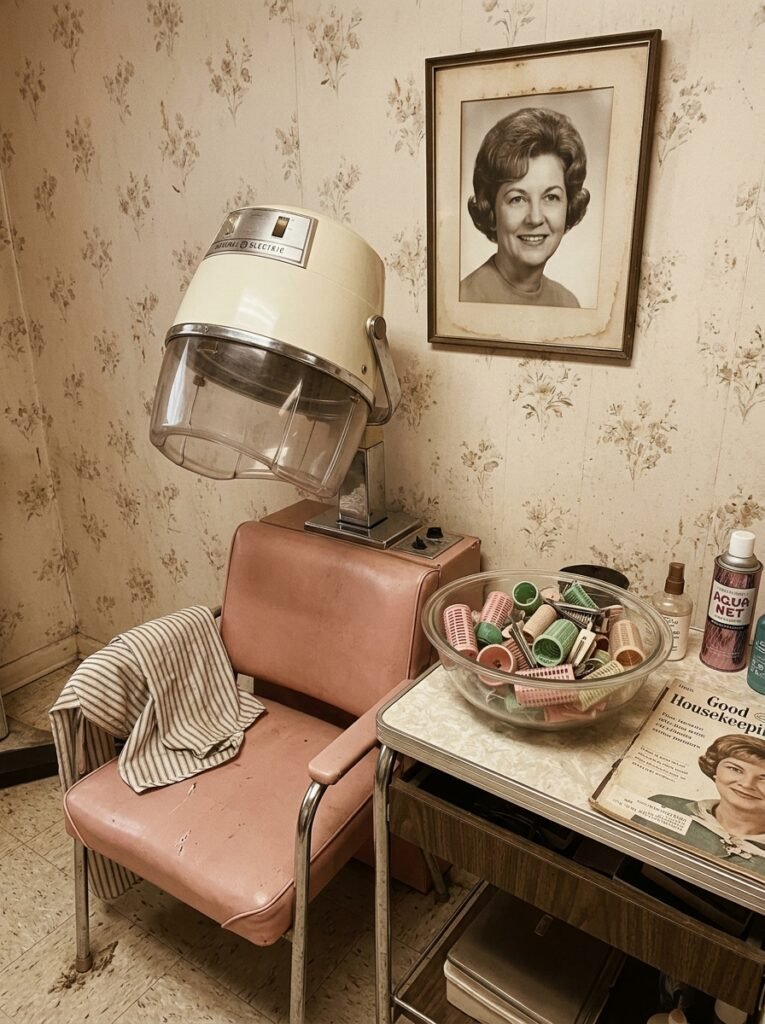
For generations, short hair after a certain age was partly practical and partly social. Weekly salon sets were the norm, home styling tools barely existed, and shorter hair was simply easier to maintain in an era of rollers and hood dryers. Layered on top of that was a cultural message that long hair belonged to the young, and that a sensible woman of a certain age should quietly retire hers.
Both halves of that logic have collapsed. Modern cuts, tools, and products make every length manageable, and the idea that femininity has an expiry date has aged far worse than any haircut ever could. What survived is a habit, not a law. Which means the decision now belongs entirely to you and your hair.
The Honest Answer: Your Hair Decides, Not Your Birthday
So how do you actually decide? Take your age out of the question completely and ask about your hair instead.
Look at your ends. If the last few inches are thin, see-through, or permanently dry no matter what you do, your length is costing you more than it gives. Hair that has grown for years carries years of wear at the ends, and sparse ends drag the whole look down.
Look at your density. If your hair has thinned noticeably, long styles stretch what you have over more distance, which reads as flat and wispy. Shorter styles concentrate it, which reads as full.
Look at your relationship with styling. If your long hair lives in the same bun every single day because dealing with it feels like a chore, you are not really wearing long hair. You are storing it.
If those three checks came back mostly negative, short hair deserves serious consideration. If your hair is thick, healthy, and genuinely enjoyed, keep it with pride. Notice that age never entered the equation.
How Hair Changes After 50 and Why It Matters
Understanding what your hair is doing makes every styling decision easier, so here is the honest biology, minus the doom.
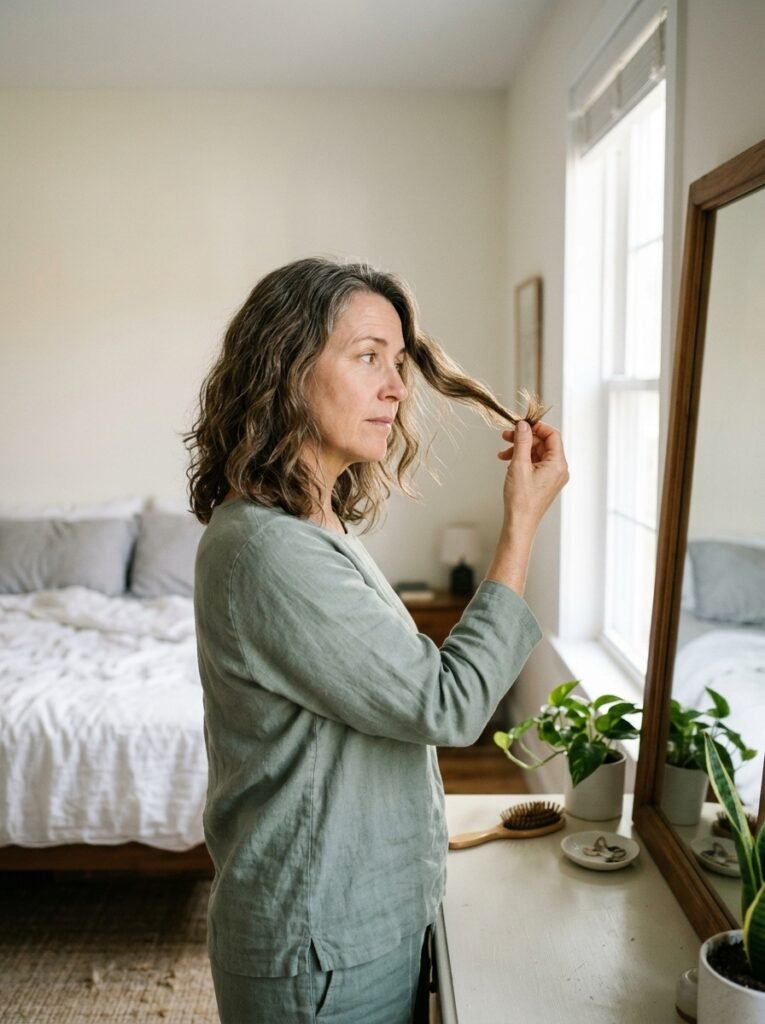
With time, individual strands gradually become finer and follicles produce fewer of them, which is why many women notice their ponytail feeling slimmer through their fifties. Hormonal shifts around menopause often accelerate this. Gray strands frequently arrive with a different texture too, sometimes wirier or coarser, because the scalp produces less of the natural oil that once kept everything smooth. Hair gets drier for the same reason, and growth slows a little, meaning tired ends stick around longer than they used to.
None of this is a crisis. It is simply a change of materials, and changed materials call for changed techniques. Finer, drier, lower-density hair tends to look its best with more moisture, more strategic volume, and often, though not always, less length pulling it down.
One important note before moving on. Gradual change is normal, but sudden or patchy shedding is worth a conversation with your doctor or a dermatologist, since it can have treatable medical causes. This guide is about styling the hair you have beautifully.
The Case for Going Short After 50
When short hair works at this stage of life, it really works, and the reasons are practical rather than traditional.
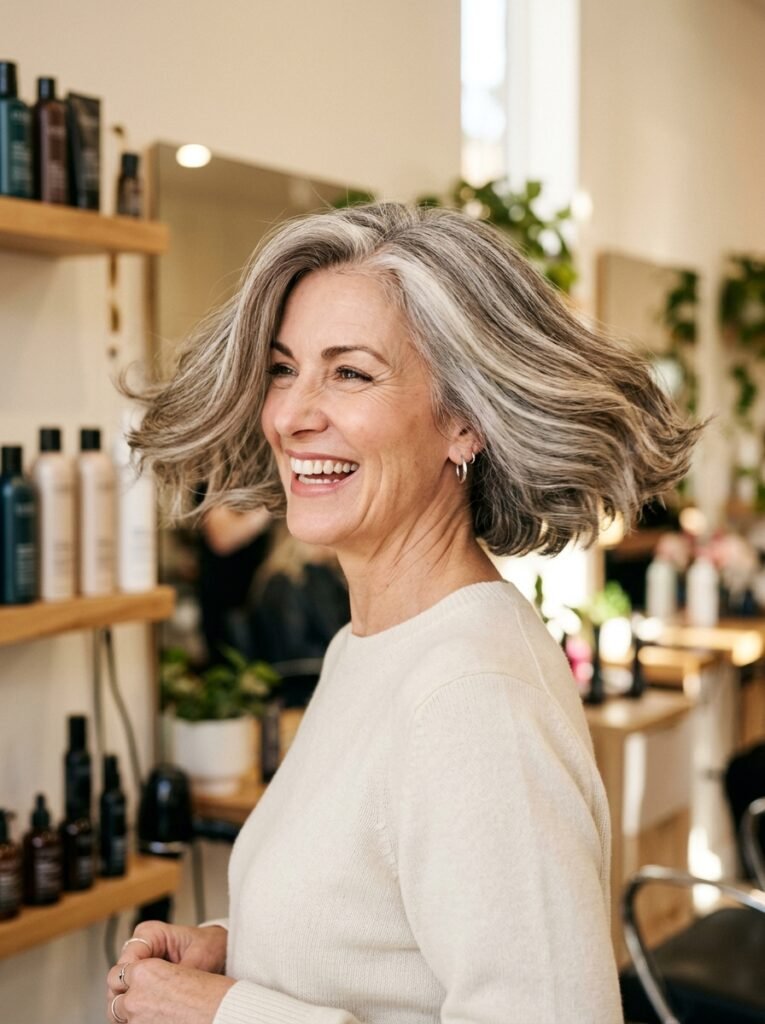
Fullness is the big one. Shorter lengths concentrate your density and remove the weight that pulls fine hair flat, so the same amount of hair suddenly looks like more. Volume also lifts visually. A cut that builds height and movement around the face draws the eye upward, which is universally flattering at any age and especially welcome now.
Then there is health. Cutting away old, tired ends means every strand on your head is newer and stronger, so short hair over 50 often simply shines more than the length it replaced.
Gray transitions get dramatically easier too. If you are growing out color, a shorter cut removes the old dye faster and makes the silver look deliberate and chic rather than stuck in between.
And there is the time. Five-minute styling, faster washes, less product. For many women the freedom alone is worth the chop.
The Case for Keeping Your Length
Now the other honest half, because long hair after 50 can be absolutely stunning, provided it meets a few conditions.
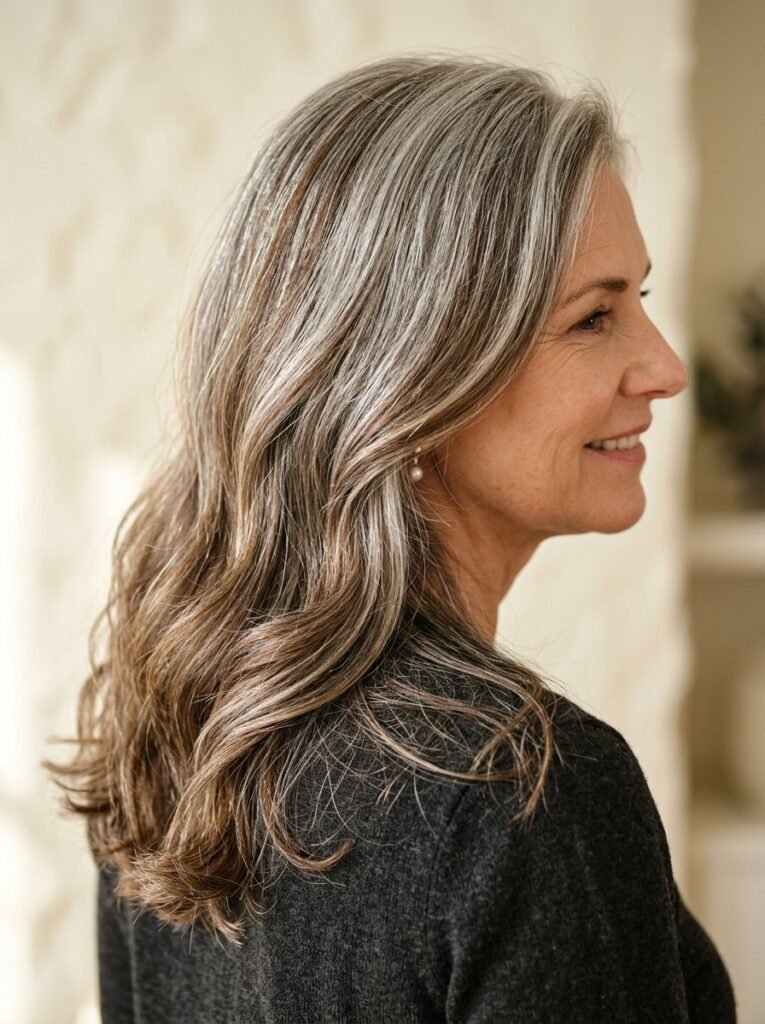
The first is health. Length only flatters when the ends are full and the shine is real, which means regular trims, consistent conditioning, and a truthful look at what the last few inches are actually doing.
The second is shape. Long hair that hangs in one heavy curtain drags the face downward at any age. Long hair with soft layers, face-framing pieces, and a little brightness around the front does the opposite, adding movement and light exactly where you want them.
The third is love. If your long hair feels like part of who you are, if you enjoy styling it and it makes you feel like yourself, that is not vanity. That is identity, and it is a completely valid reason to keep every inch.
Long hair over 50 is not breaking any rule. It simply asks for a little more intention than it did at 30, and plenty of women give it gladly.
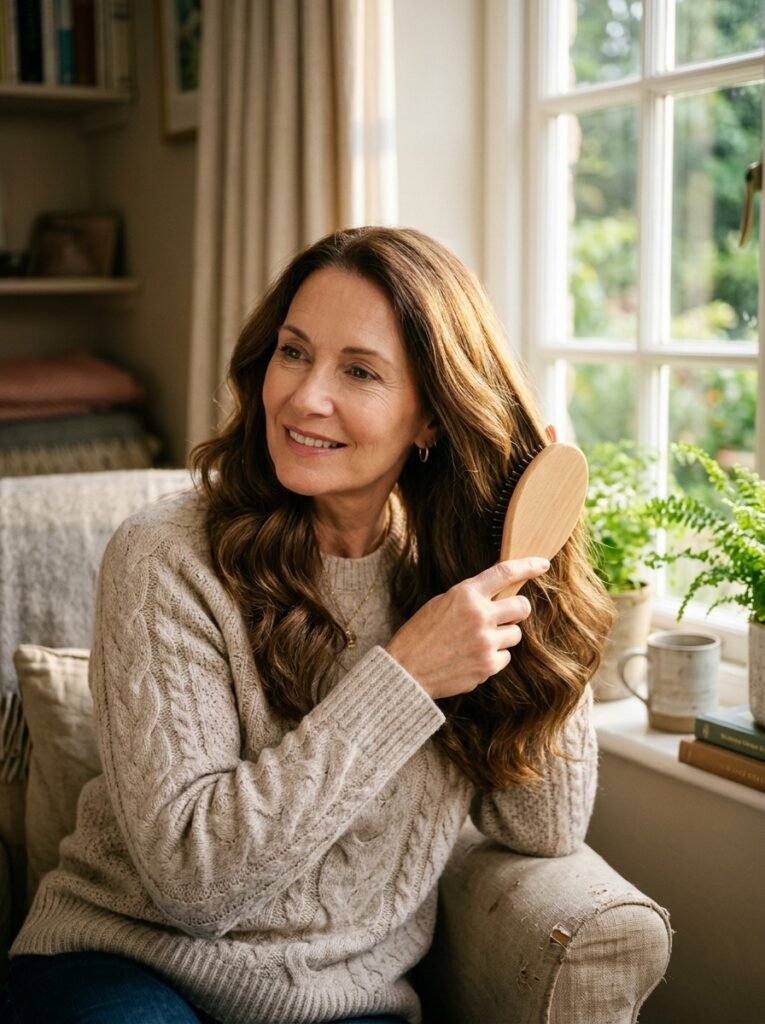
The Most Flattering Short Haircuts for Women Over 50
If you are leaning toward the chop, these four cuts consistently earn the most compliments, and each works a little differently, so match the shape to your hair and your nerve.
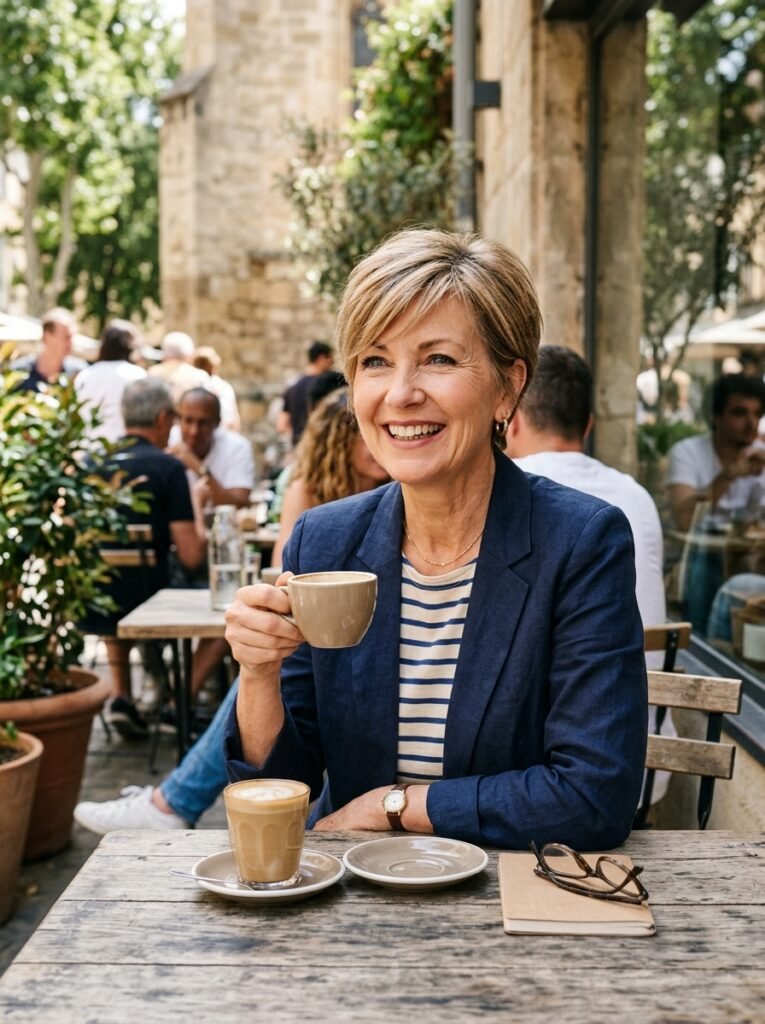
The Collarbone Lob
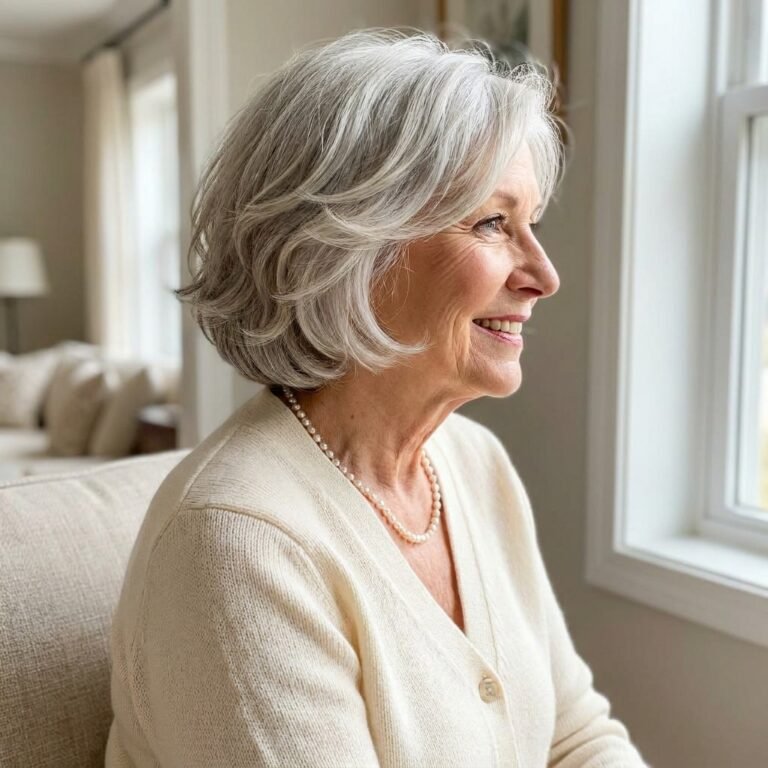
The gentlest entry into short hair, the lob lands between the chin and collarbone and flatters practically everyone. It is short enough to lift weight off fine hair and restore bounce, yet long enough to tuck, wave, or pull back on busy days. Ask for subtle face-framing layers and a soft bend through the lengths. If years of long hair have made you nervous, this is the cut that lets you test shorter life without a single regret, and it grows out gracefully if you ever change your mind.
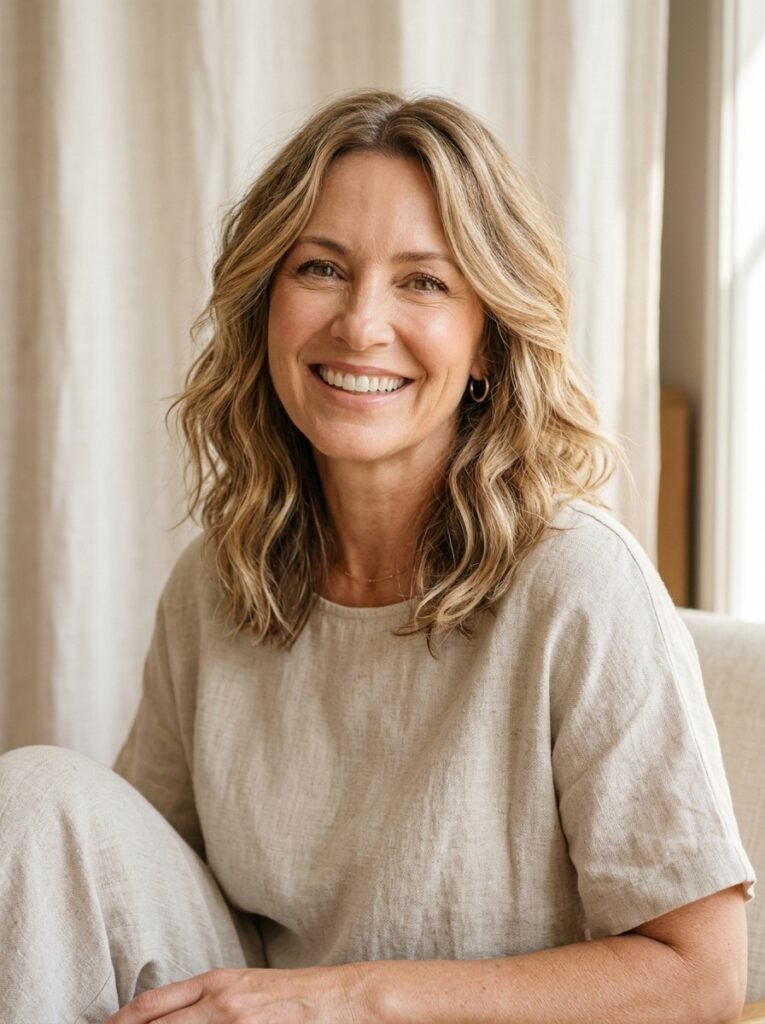
The Soft Layered Bob
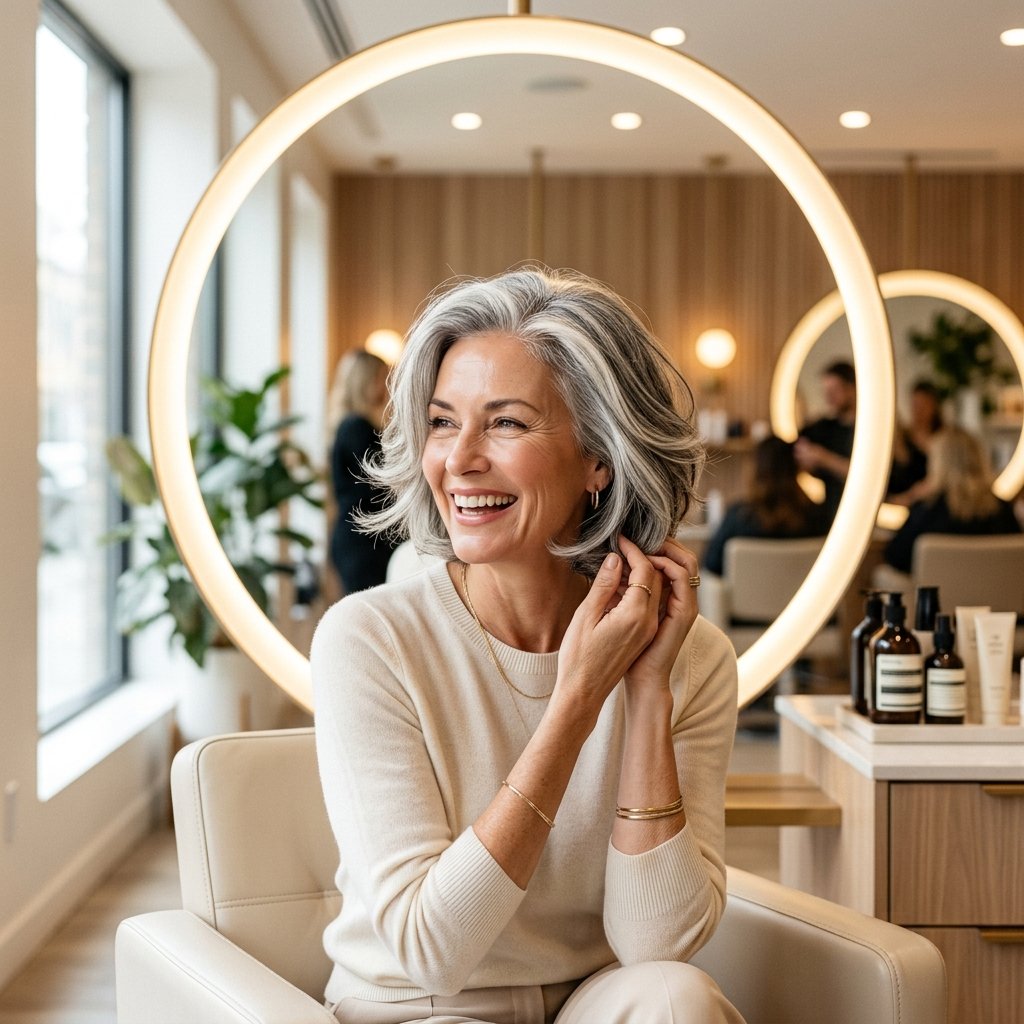
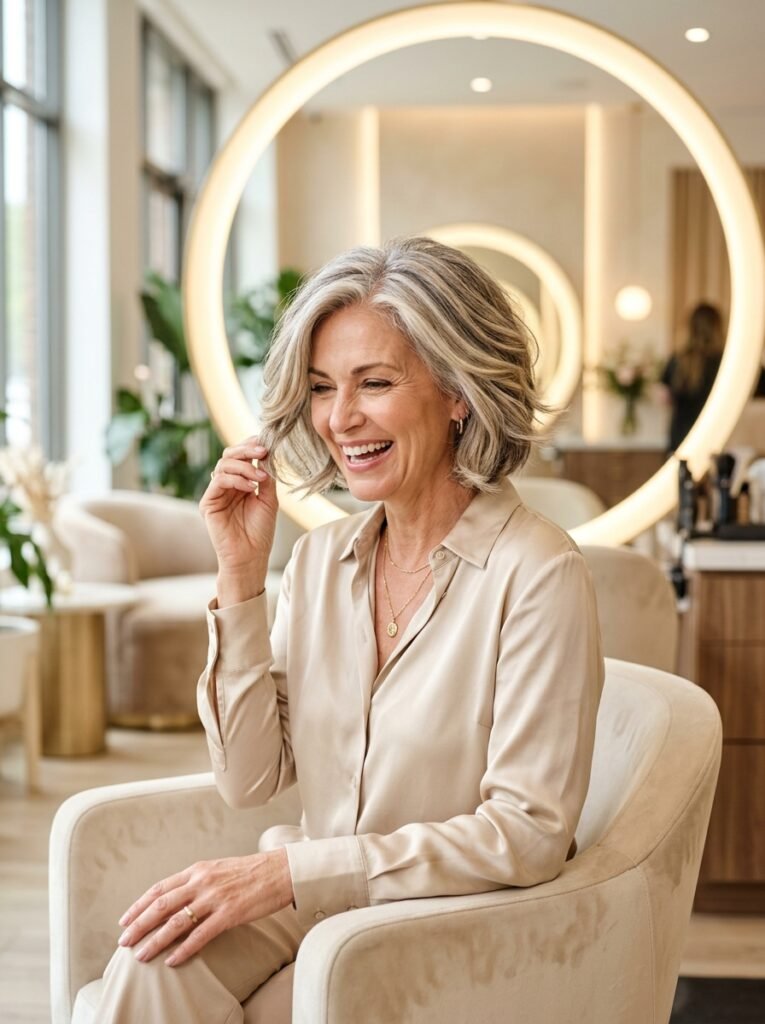
A bob built with gentle internal layers is arguably the hardest-working cut for women over 50, because it manufactures the two things mature hair misses most, volume and movement. The layers lift the crown, the length frames the jaw, and the whole shape bounces when you walk. Keep the layering soft rather than choppy so the ends stay full, and blow dry with a round brush for salon-level body in minutes. This is the cut that consistently makes people ask what you have changed.
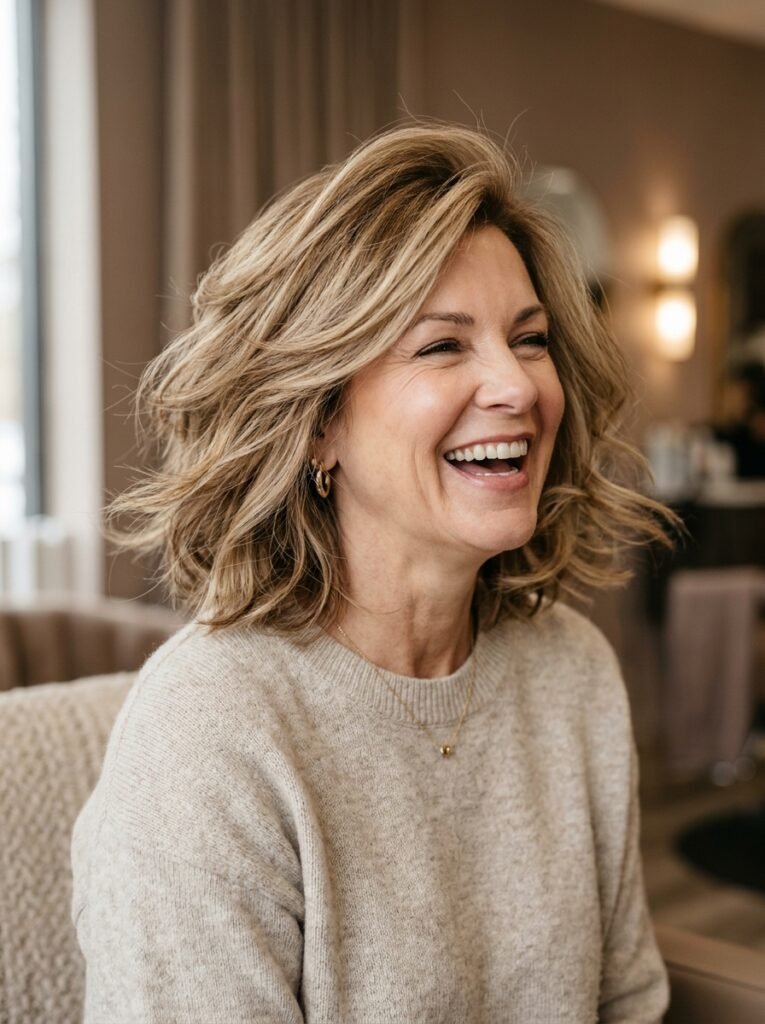
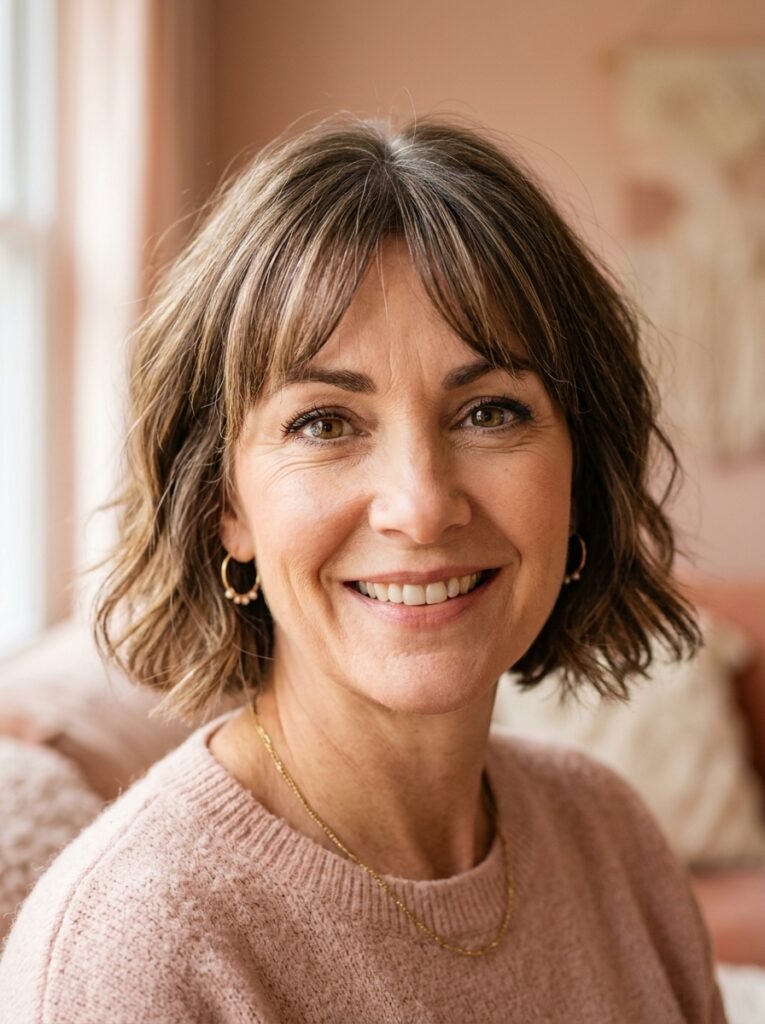
The Chin-Length Bob with Curtain Bangs
Pairing a chin-grazing bob with soft curtain bangs is one of the most quietly youthful combinations available. The fringe sweeps gently to each side, softening the forehead and drawing attention straight to your eyes, while the bob length keeps everything crisp and modern. It suits fine and medium hair beautifully and works with or without gray. Ask for wispy, longer bangs that melt into the sides rather than a heavy straight fringe, and enjoy how much lighter the whole face looks.
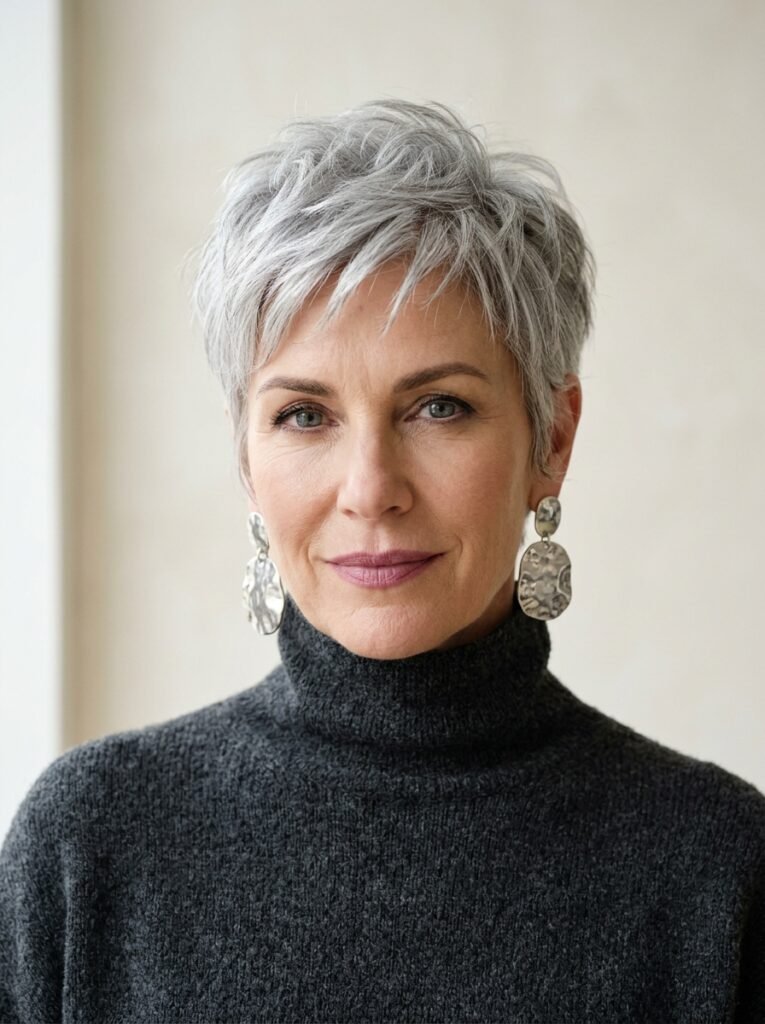
The Textured Pixie
For the bold, a soft textured pixie is pure confidence, and on the right woman it takes years off in a single appointment. The secret is in the word textured. Piecey layers through the crown, a little length to play with on top, and soft edges around the ears and neck keep it feminine and modern, while a severe uniform crop does the opposite. A dab of light paste is the entire styling routine. Pixies showcase eyes, cheekbones, and earrings gloriously, and they make silver hair look downright editorial.
Practical Tips If You Decide to Go Short
A few smart moves make the transition smoother and the result better.
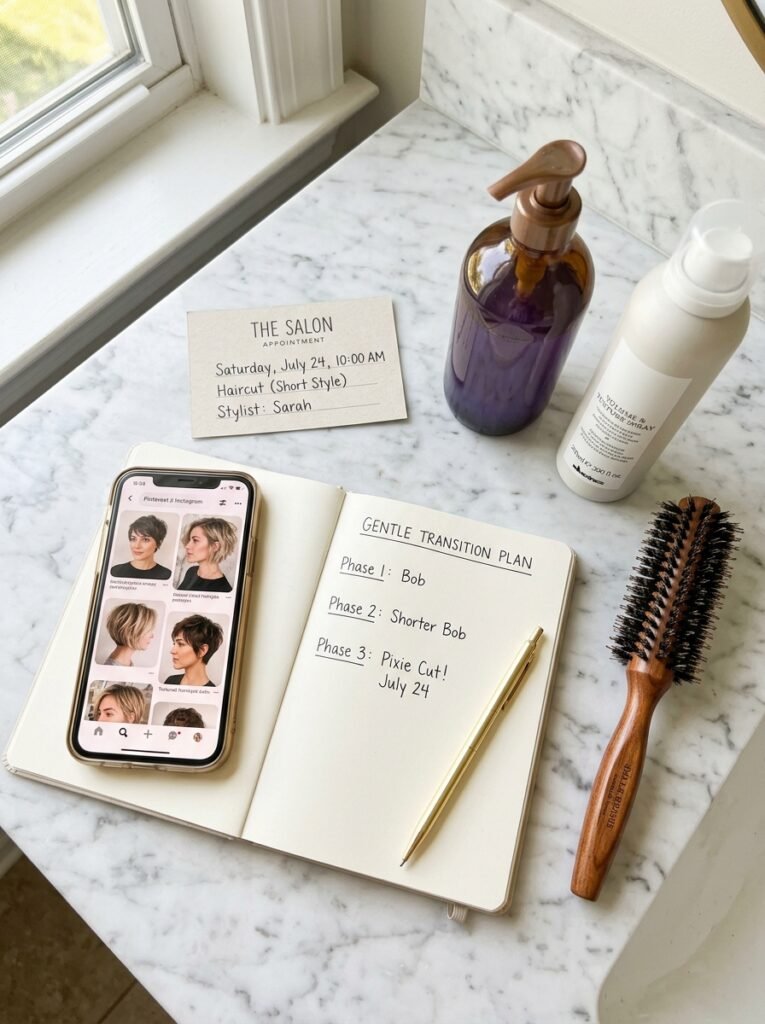
- Go in stages if you are nervous. Long to lob, lob to bob, bob to shorter. Each step tells you whether to continue.
- Book a consultation and bring photos of short hair on women with a similar texture and, ideally, a similar stage of life.
- Talk color at the same appointment. A gloss, subtle highlights, or a brightened face frame adds the dimension and shine that make any short cut look expensive.
- Update your products. Mature hair usually wants a hydrating shampoo, a lightweight conditioner kept away from the roots, and a texture spray or mousse for lift.
- If you are silver or going silver, keep a purple shampoo in rotation to stop yellow tones from dulling the effect.
- Rebook before you leave the salon. Short cuts hold their magic with trims every four to eight weeks.
Small preparations, dramatically better outcome.
Common Mistakes That Age a Short Haircut
Short hair is not automatically flattering. These are the missteps that steal its youthfulness.
The severe crop is the first. Ultra-short, uniform cuts without softness or texture can read as harsh, especially against features that have themselves softened over time. Ask for movement and piecey texture rather than clipped precision.
Stiffness is the second. Hair sprayed into a motionless helmet ages any cut instantly, because movement is what reads as youthful. Choose flexible products and let the hair actually swing.
Autopilot is the third. Wearing the exact style you chose fifteen years ago, out of habit rather than love, quietly dates the whole look. Small updates every couple of years, a new fringe, a refreshed layer, a slight tone shift, keep things current.
Flat, dull color is another, and this applies to dyed and natural silver alike. A gloss or toner restores the light-reflecting shine that makes hair look healthy and full.
And the biggest mistake of all is cutting your hair short because you think you are supposed to. A chop made under pressure rarely gets styled with joy, and joy is half the look.
What Stylists Wish Every Client Over 50 Knew
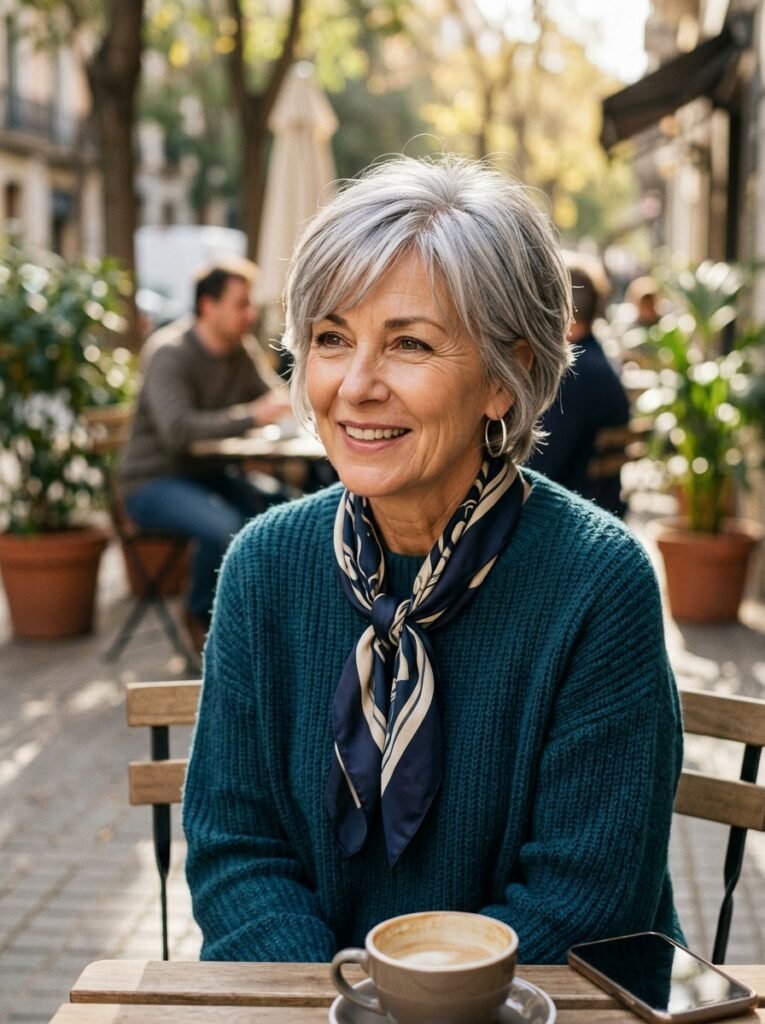
Stylists who work with mature hair every day repeat the same handful of truths.
Volume and movement are the real fountain of youth, far more than length or color. Any decision that adds lift around the face is nearly always the right one.
Softness beats severity. Wispy edges, gentle layers, and a little undone texture flatter mature features, where harsh lines and sharp precision tend to fight them.
Brightness near the face is transformative. Whether it comes from a warm gloss, fine highlights, or beautifully maintained silver, light around the front lifts the entire complexion.
The cut should fit your life. Be honest about how much styling you genuinely enjoy, and choose a shape that still looks good on its lazy days.
And finally, there is no such thing as age-appropriate. There is only what makes you feel like yourself when you catch your reflection. That is the entire test.

Frequently Asked Questions
Does short hair make you look younger after 50?
It can, but not automatically. Short cuts that add volume, softness, and movement around the face tend to read as youthful, while severe, stiff, or overly uniform crops can do the opposite. The styling matters just as much as the length.
Is it okay to have long hair over 50?
Absolutely. The honest test is condition, not age. Long hair works beautifully after 50 when the ends are full and healthy and the shape includes soft layers and face framing. Thin, straggly length is the only version worth rethinking.
What is the most flattering haircut for women over 50?
A soft layered bob is the most consistently flattering choice, because it builds volume at the crown and movement around the face, the two things mature hair benefits from most. A collarbone lob with face-framing layers is a very close second.
Should I go gray when I cut my hair short?
Only if you want to. Going short does make a gray transition faster and easier, since the old color disappears within a few trims. If you do embrace silver, regular glosses and a purple shampoo keep it looking bright and intentional.
Are there hairstyles to avoid after 50?
There are no forbidden styles, only ones that tend to work against you. Heavy one-length hair with thin ends, severe uniform crops, and stiff over-sprayed styles are the usual culprits. Softness, movement, and healthy ends flatter at every age.
Final Thoughts
So, should you cut your hair short after 50? Only if your hair, your lifestyle, and your own preference all whisper yes. The calendar gets no vote.
What deserves a real look is the evidence in your mirror. Ends that have gone sparse, volume that has quietly left, a style worn from habit rather than happiness. If that sounds familiar, a shorter, softer, livelier cut may be the most flattering decision you make this decade. If your length is thriving and you love it, keep it and never apologize for it.
Either way, make the choice from excitement, book the consultation, and walk in with photos and honesty. The most youthful thing a woman over 50 can wear was never a particular haircut. It is hair, at any length, that she chose for herself and clearly enjoys.