Which Hairstyles Suit a Round Face (and Which Ones to Avoid)
If you have a round face, you have probably collected a lifetime of conflicting hair advice. One article swears you should never cut above your shoulders, another insists a bob is your best friend, and somewhere an aunt once declared bangs out of the question forever.
Time to clear it all up. Round faces are genuinely lovely, with soft lines and full cheeks that tend to stay youthful for decades, and there is a long list of hairstyles that flatter them beautifully. There are also a few specific styles that work against those proportions, and understanding why is far more useful than memorizing any list.
This guide covers all of it. How to confirm your face is actually round, the principles that make any style work, the most flattering cuts to ask for, the ones to approach carefully, and the styling tricks that change everything.

How to Know If You Actually Have a Round Face
Before rearranging your whole hair strategy, make sure the label fits, because round is one of the most commonly misassigned face shapes.
Pull your hair completely back and look straight into a mirror, or take a photo at eye level with a relaxed expression. A genuinely round face is about as wide as it is long, with the cheekbones as the widest point, a softly curved jawline with no sharp angles, and a gently rounded hairline. The overall impression is circular, full through the cheeks, and short rather than elongated.
Here is where people get confused. An oval face is noticeably longer than it is wide, so if your face has clear length, you are likely oval even with full cheeks. A square face shares the equal width and length but has a strong, angular jaw. If your jaw makes a soft curve rather than a corner, round is your answer.
And as always, most of us are a blend of two shapes. If you sit somewhere between round and oval, follow the round-face guidance loosely and enjoy the extra flexibility.
What Actually Flatters a Round Face
Every recommendation in this article comes from three simple principles, and once you understand them you can evaluate any hairstyle yourself, including next year’s trends.
The first principle is that length creates length. A round face is visually short, so styles that fall below the chin, carry a vertical line, or build height at the crown all stretch the face’s appearance and bring it closer to that balanced oval everyone chases.
The second is that angles balance curves. Diagonal lines, side parts, asymmetry, and face-framing layers introduce direction and structure that soft, circular features do not have on their own.
The third is that volume placement is everything. Fullness at the sides of the face, right at cheek level, adds width where you already have plenty. The same fullness moved to the crown, or dropped below the jaw, flatters instantly.
That is genuinely the whole science. Elongate, angle, and control where the volume sits. Now let us turn those principles into actual hairstyles.
The Most Flattering Hairstyles for a Round Face
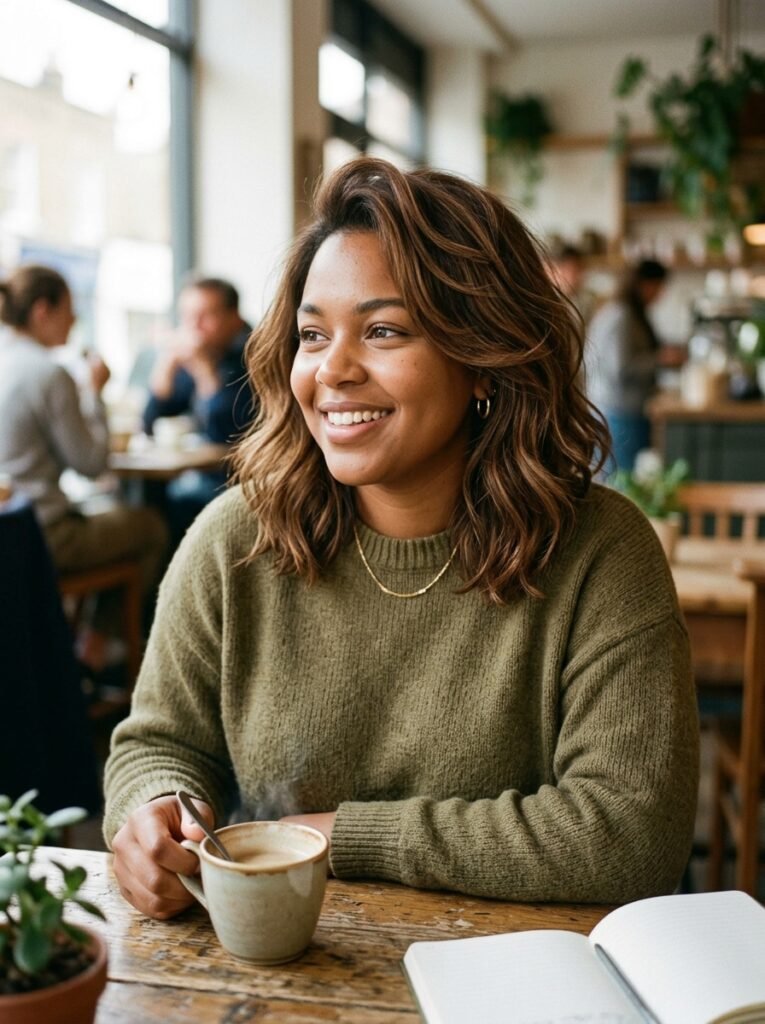
These six styles apply the principles beautifully, and between them they cover every length, texture, and effort level.
Long Layers That Start Below the Chin
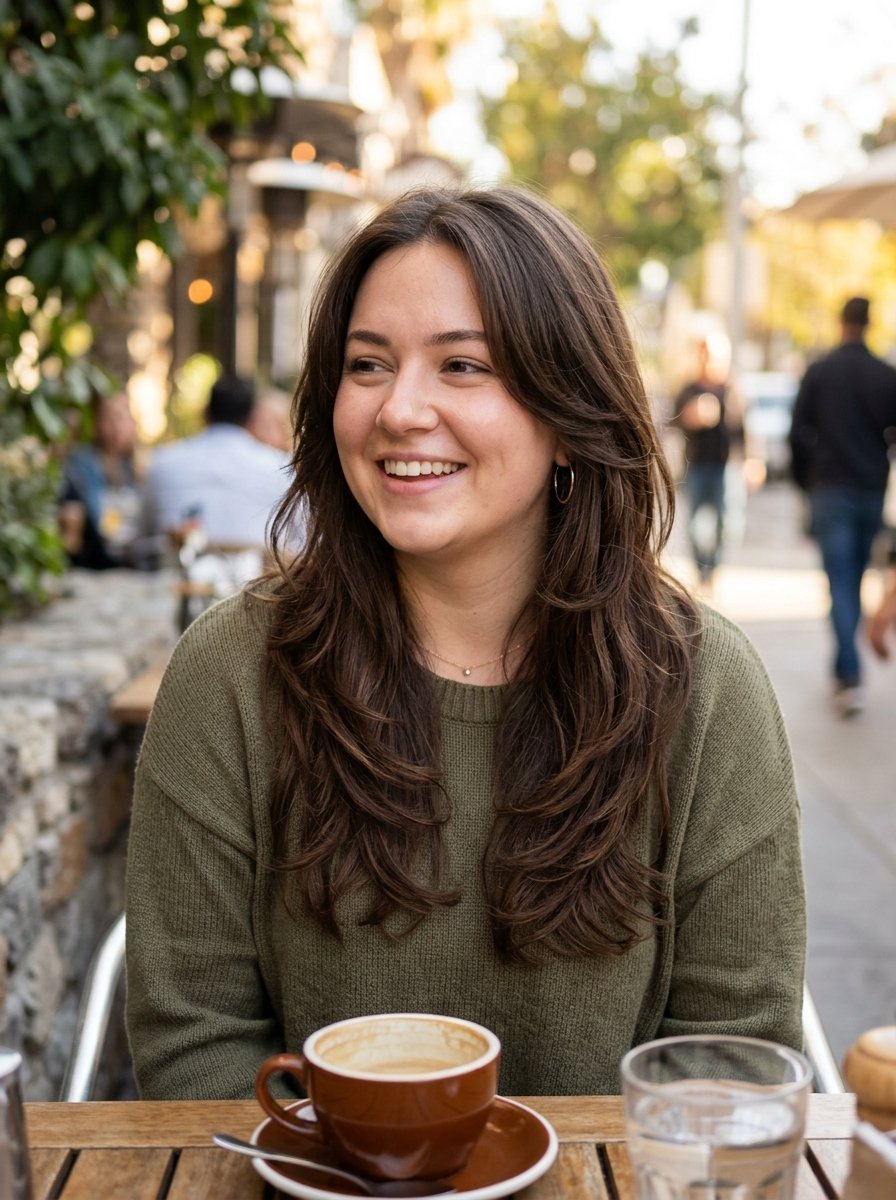
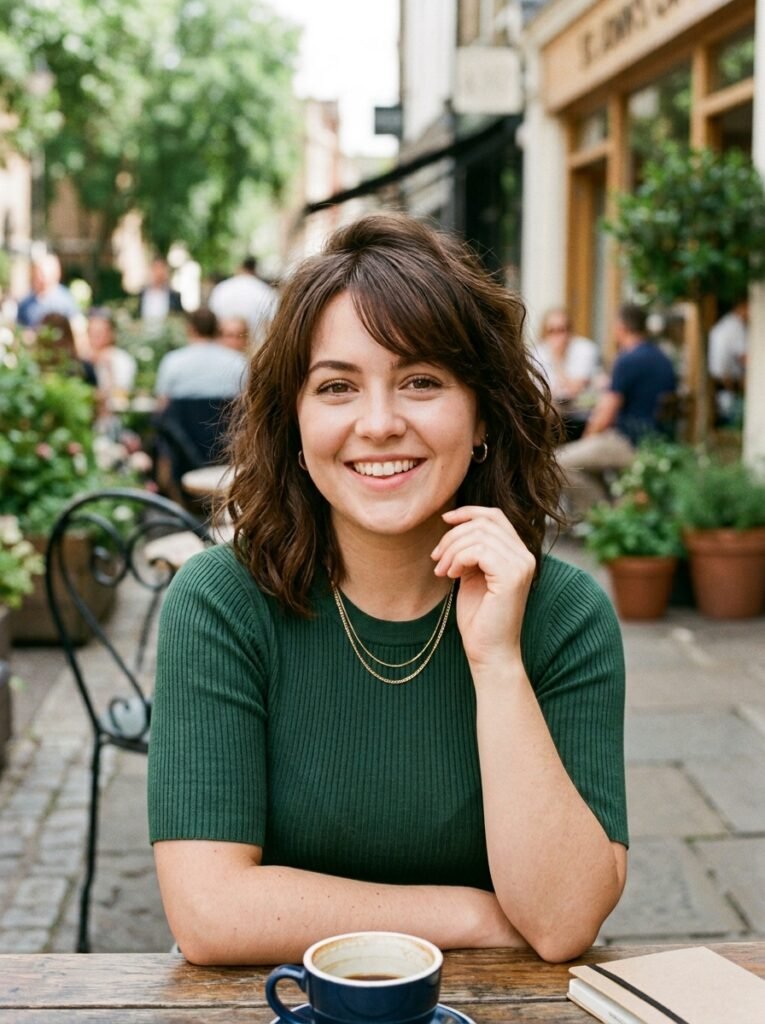
Long hair with layers is the round face classic for good reason. The length itself draws the eye downward, and layers that begin below the chin create soft diagonal lines past the widest part of the face rather than at it. Ask your stylist to keep the shortest layer at chin level or lower and to add gentle face-framing pieces angling toward the collarbone. Styled straight, it is sleek and elongating. Styled in loose waves that start around the jaw, it is romantic and every bit as flattering.
The Textured Lob That Falls Past the Jaw
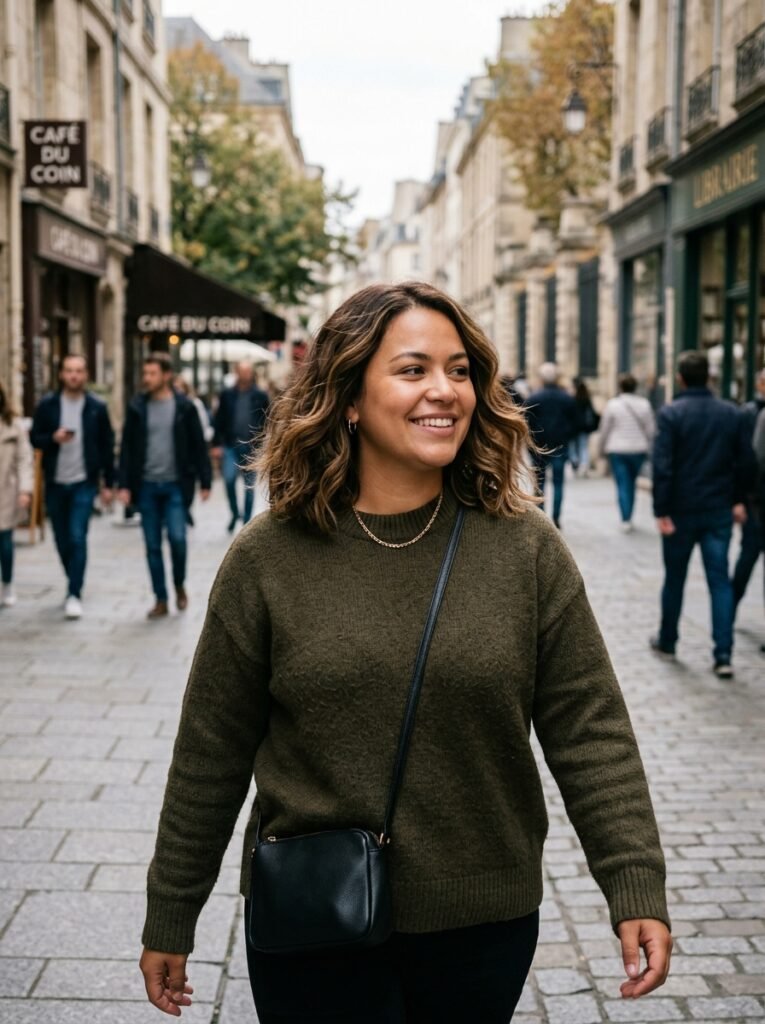
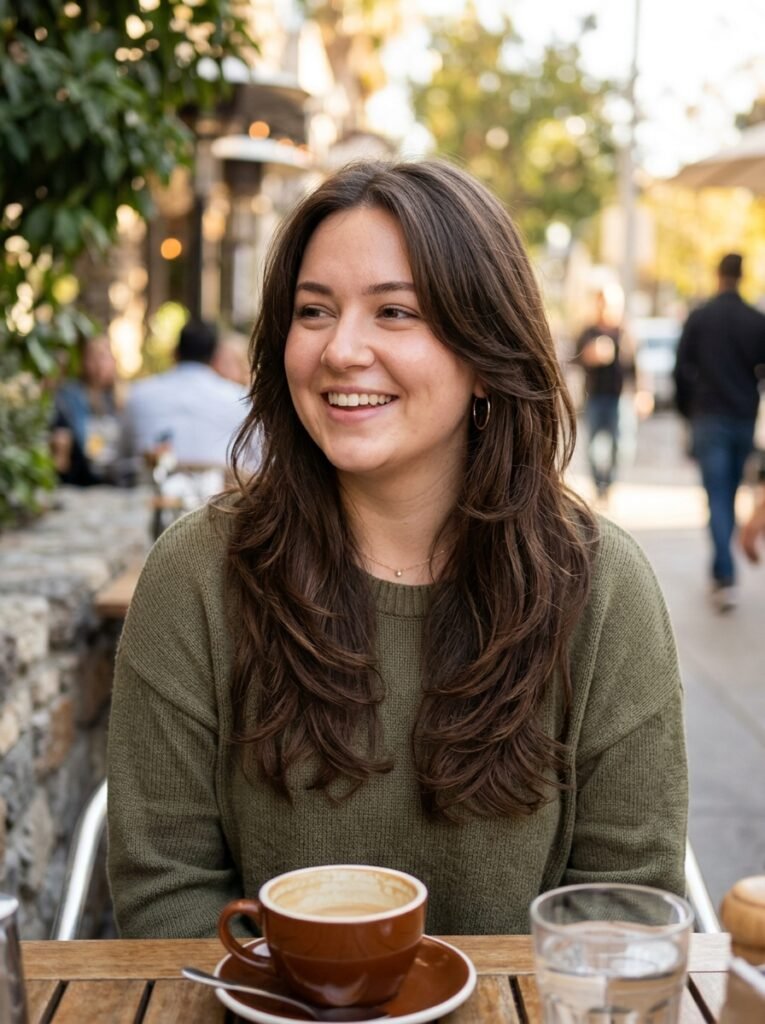
You can absolutely wear shorter hair with a round face, as long as the length clears the jawline. A lob landing two or three inches below the jaw, finished with soft texture and subtle long layers, gives you all the freshness of a bob without ending at your widest point. Add a loose bend through the lengths and keep the ends soft rather than blunt. This is the single best answer for anyone with a round face who wants modern, manageable, shorter hair.

The Deep Side Part with Soft Waves
A deep side part is the cheapest facelift in hairstyling. Sweeping the hair diagonally across the forehead creates instant asymmetry, breaks up the circular outline, and adds effortless volume at the crown where round faces want it most. Pair the part with soft, brushed-out waves directed away from the face and you have a style that flatters at every length. If you have worn a middle part for years, flip it for one day and watch how differently your face reads.
Curtain Bangs That Graze the Cheekbones
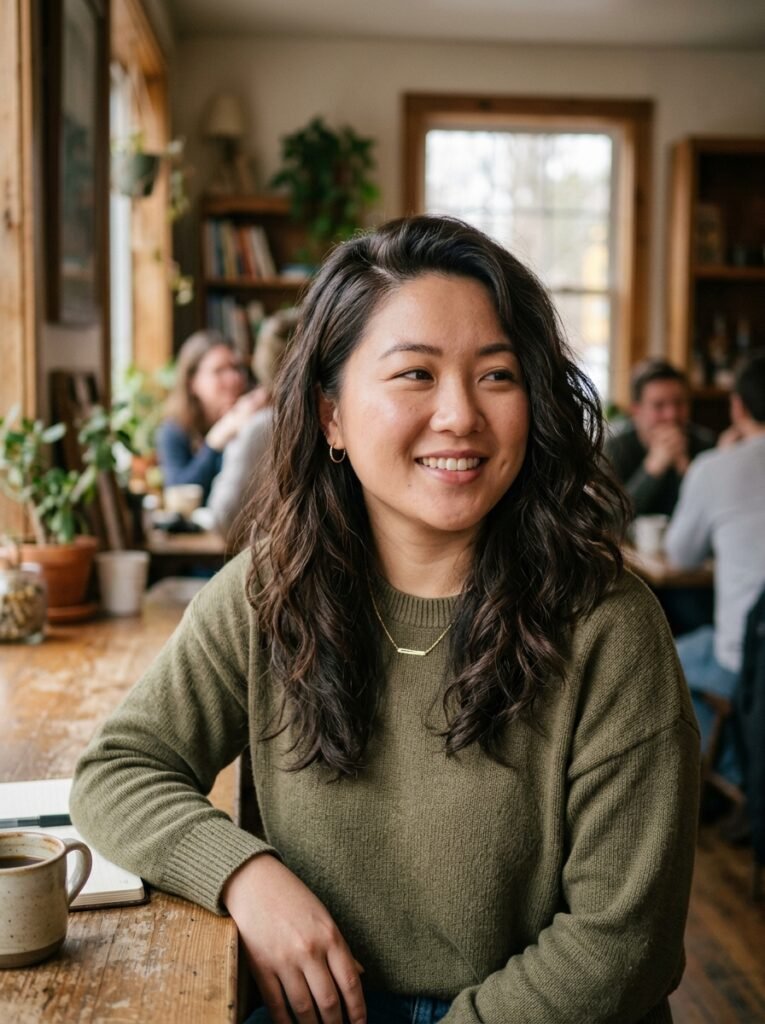
Bangs and round faces are famously complicated, but curtain bangs solve the whole debate. Because they part in the middle and sweep to the sides, they frame the face with two long diagonal lines that slim the cheeks and pull attention to the eyes. The key is length. Ask for the shortest pieces to hit around the cheekbones, never above, so the fringe elongates rather than shortens. They blend into layers, grow out gracefully, and suit nearly every texture.

The High Ponytail or Sleek Top Knot
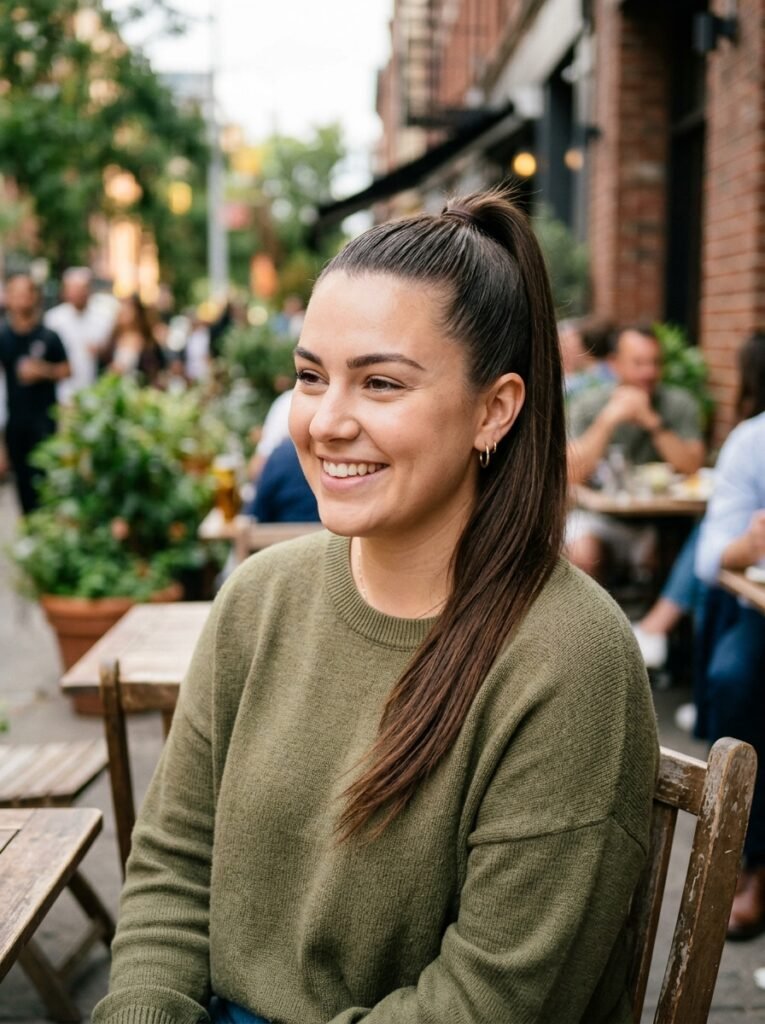
Updos are where round faces can genuinely shine, provided the style goes up rather than back. A high ponytail or top knot positioned toward the crown builds vertical height, draws the eye upward, and visually lengthens the whole face. Add a little lift at the roots before securing, and leave two soft face-framing strands loose to break up the hairline. Low, tight styles at the nape do the opposite, so when in doubt, take the elastic higher.
The Long Asymmetrical Bob
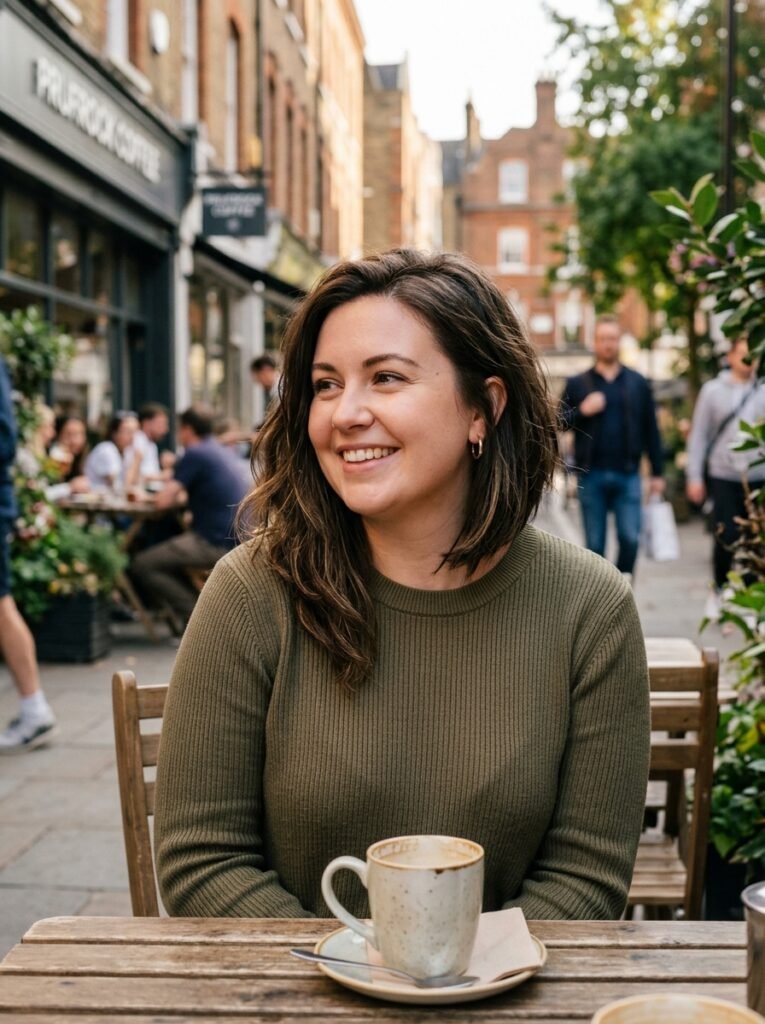
If you love the idea of a bob, wear it on an angle. An asymmetrical or steeply angled bob that sits shorter at the back and noticeably longer toward the front creates strong diagonal lines that slice past the cheeks instead of circling them. Keep the front pieces at least an inch or two below the chin, and ask for a side part to double the asymmetry. It is a sharp, fashion-forward way to go short while working with your proportions rather than against them.
The Hairstyles to Approach with Caution
Now for the honest half of the title. None of these styles is forbidden, but each one fights a round face’s proportions, so if you love the look anyway, use the workaround.
The chin-length blunt bob is the biggest offender, because a strong horizontal line ending exactly at your widest point maximizes width. The fix is simple. Take the same bob two inches longer, or angle it so the front sits lower than the back.
Heavy straight-across bangs come next. A thick blunt fringe chops visual length off an already short face, making it read wider. If you adore a fringe, choose curtain bangs, a side-swept version, or ask for the blunt line to be softened and left longer at the edges.
Volume at cheek level, whether from tight short curls, a cut that stacks fullness at the sides, or an old-fashioned rounded blowout, adds width exactly where it hurts. Move the volume to the crown and let the sides lie closer to the head.
The flat middle part with poker-straight hair can emphasize roundness by hugging the cheeks symmetrically. It becomes wearable with plenty of length, a wave that starts below the jaw, or genuine lift at the roots.
And the slicked-back low bun exposes the entire outline of the face with no softening at all. Take it high instead, add crown volume, and pull out a couple of face-framing pieces.
Styling Tricks That Slim and Elongate a Round Face
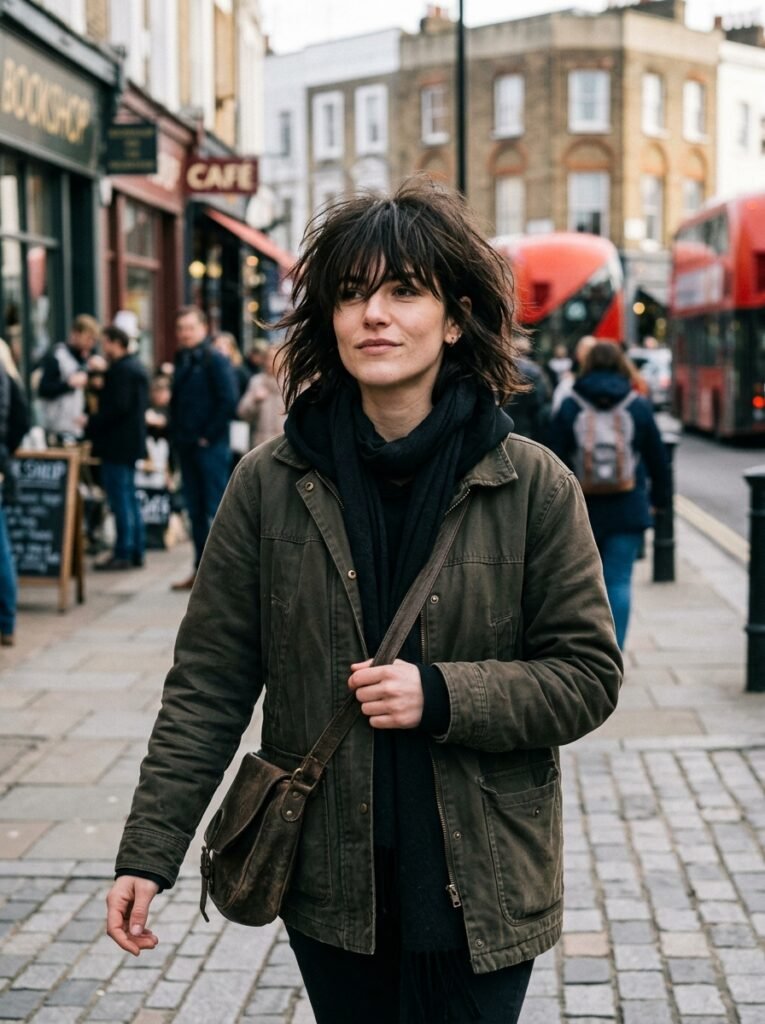
Even without changing your cut, daily styling choices reshape how a round face reads.
Build height at the crown every time you style. A few blasts of the dryer at the roots, a couple of velcro rollers on top, or a gentle backcomb under the surface adds the vertical lift that balances width.
Start your waves low. Curls and bends that begin at ear level or below add movement without adding cheek width, so wrap the iron from the jaw down and leave the top section smooth.
Use your part strategically. A deep side part is the most reliably flattering, and even a middle part works when the hair around it has length and lift.
Leave face-framers out. Whenever you tie your hair back, free two slim pieces at the front. Those soft vertical lines slim the face more effectively than any contouring product.
And keep the sides calm. Smooth the hair at cheek level close to the head with a touch of serum, then let the volume live above and below that zone.
Practical Tips Before Your Next Salon Visit
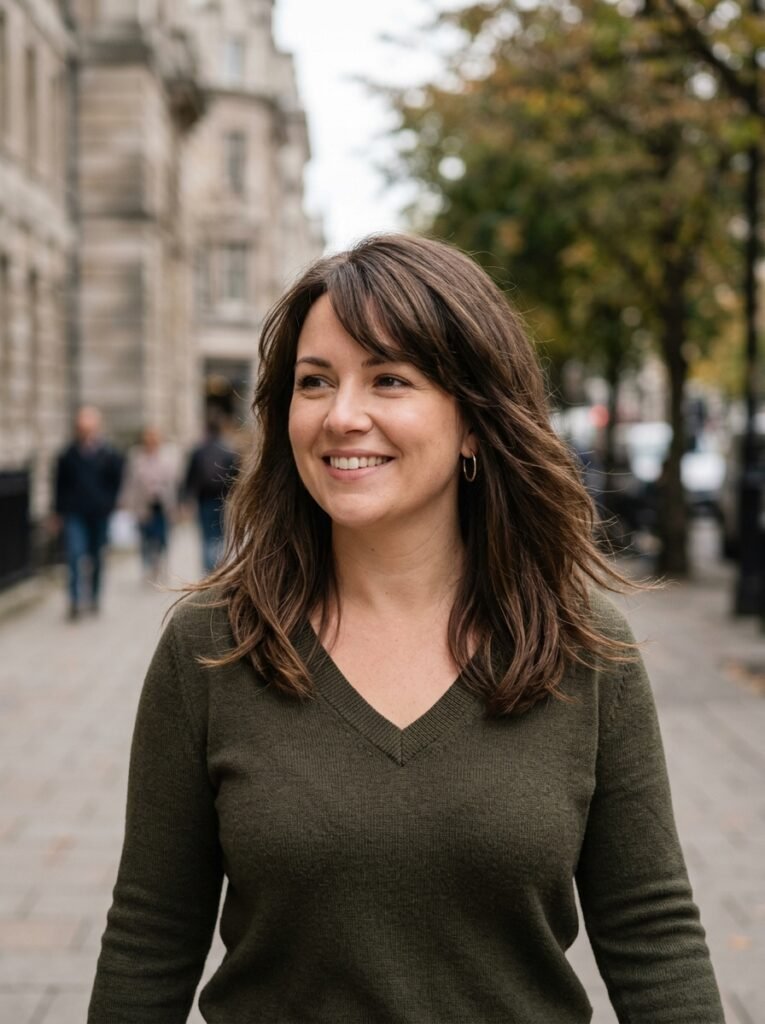
Walk in prepared and the cut takes care of itself.
- Say the sentence that matters most. Ask for layers and length that finish below the chin, with volume at the crown rather than the sides.
- Bring three to five photos of styles you love, ideally on faces with similar proportions and hair texture to yours.
- Ask your stylist to show you where the shortest layer will land before any cutting begins.
- Test drive a deep side part and a high ponytail at home this week. They cost nothing and preview the principles instantly.
- If you are considering bangs, request curtain bangs cut on the longer side first. They can always go shorter once you have lived with them.
Five minutes of clear direction beats an hour of hopeful guessing.
Common Mistakes People with Round Faces Make
A few patterns show up again and again, and every one of them is fixable.
The first is hiding behind hair. Letting long, flat panels hang over the cheeks to conceal them usually backfires, drawing more attention to the very thing you are covering. Framing beats hiding every time.
The second is following trends without translating them. A viral chin-length bob or a micro fringe can absolutely be adapted for a round face, but copied exactly from someone with an oval face, it will not land the same way.
The third is fearing all short hair. Plenty of round-faced women rule out bobs, lobs, and pixies entirely, when the truth is that angle, length placement, and crown volume make most short styles completely workable.
The fourth is symmetrical everything. Middle part, even lengths, matching sides. Perfect symmetry emphasizes a circle, while a little asymmetry flatters it.
And the last is treating the guidelines as prison rules. They are starting points. If a supposedly forbidden style makes you feel fantastic, wear it with confidence, because confidence photographs better than proportions ever will.
What Stylists Wish Round-Faced Clients Knew
Stylists who work with face shapes every day tend to say the same things.
A round face is an asset, not a problem to solve. Full cheeks and soft lines read as youthful for decades, and the goal of a good cut is balance, never disguise.
The chin is the magic line. Where your hair ends and where your layers begin, relative to your chin, decides most of the effect. Below it flatters, at it widens, and every stylist worth their scissors knows the difference.
Texture is a tool. A soft bend or wave placed below the jaw slims the face more effectively than flat ironing ever will.
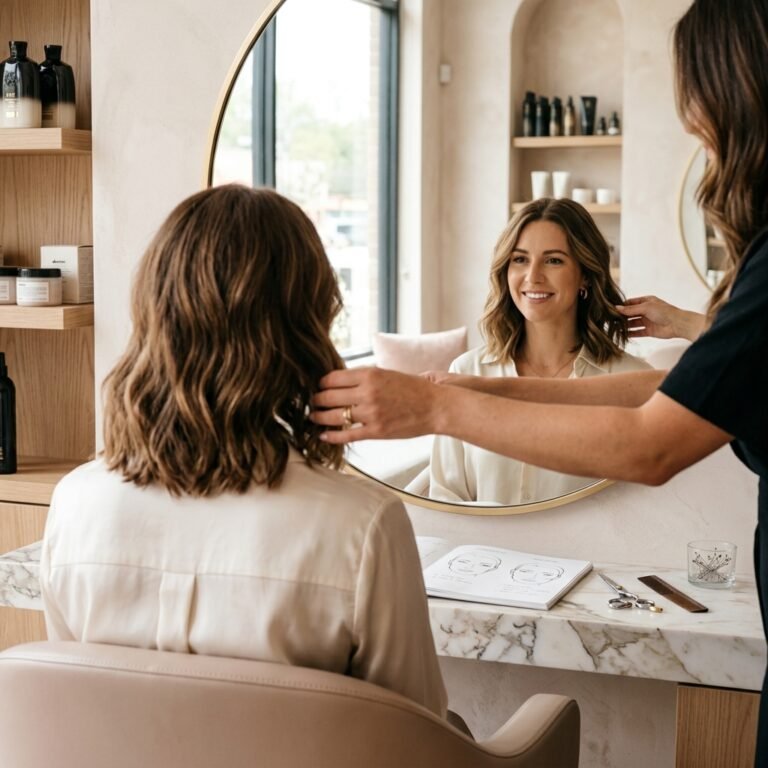
And the consultation matters more than the label. A skilled stylist studies your actual proportions, hairline, and texture rather than filing you under round and reciting rules. Find one who talks about your face, not a chart.
Frequently Asked Questions
What is the best hairstyle for a round face?
Long layers that start below the chin are the most universally flattering choice, because they add length and diagonal movement past the widest part of the face. A textured lob that falls a few inches past the jaw is the best shorter option.
Should people with round faces get bangs?
Yes, with the right style. Curtain bangs that graze the cheekbones and side-swept fringes flatter round faces beautifully by adding diagonal lines. Heavy, straight-across blunt bangs are the only version worth avoiding, since they visually shorten the face.
Do short haircuts suit round faces?
They can. The rules are simple. Keep the length past the jawline, add an angle or some asymmetry, and build volume at the crown rather than the sides. A long angled bob or a pixie with height on top both work wonderfully.
Is a middle part or side part better for a round face?
A deep side part is the safer, more flattering default, because it adds asymmetry and crown volume in one move. A middle part can still work if your hair is long, lifted at the roots, and waved below the jaw rather than flat against the cheeks.
Does long or short hair make a round face look slimmer?
Length below the chin generally slims a round face most reliably, but placement matters more than inches. Short styles with height and angles can flatter just as well as long ones, while flat, cheek-hugging hair widens at any length.
Final Thoughts
Dressing a round face well was never about restriction. It comes down to three moves you now know by heart. Add length or height, bring in angles, and keep the volume away from your cheeks.
Run any style you are considering through those three checks and you will predict the result before a single strand is cut. Book the long layers, test the deep side part tomorrow morning, or finally take the leap on that angled bob you have been saving for months.
And remember the quiet advantage you carry. Round faces hold their softness and youth long after other shapes have sharpened. The right hairstyle does not fix a round face, because nothing needs fixing. It simply frames one of the friendliest, most photogenic face shapes there is, exactly the way it deserves.