
Thin Hair, Big Volume: Haircuts and Styling Tricks That Create Fullness
Anyone with thin hair knows the routine. You blow dry, you fluff, you walk out the door feeling reasonably bouncy, and by lunchtime your hair has quietly collapsed against your head like it never even tried.
Here is what most people with fine or thin hair never get told. Flat hair is rarely a hair problem. It is usually a strategy problem. The wrong haircut, the wrong products, and a few innocent daily habits are doing more to steal your volume than your actual hair ever did.
The good news is that every one of those things can be fixed. In this guide you will learn which haircuts genuinely create the illusion of thickness, the styling tricks stylists use to build volume that lasts past noon, the products actually worth your money, and the mistakes that quietly flatten everything. Big volume is absolutely possible with thin hair. You just have to play the game a little differently.
Fine Hair vs Thin Hair: Why the Difference Matters
These two words get used interchangeably, but they describe different things, and knowing which one you are dealing with changes your game plan.
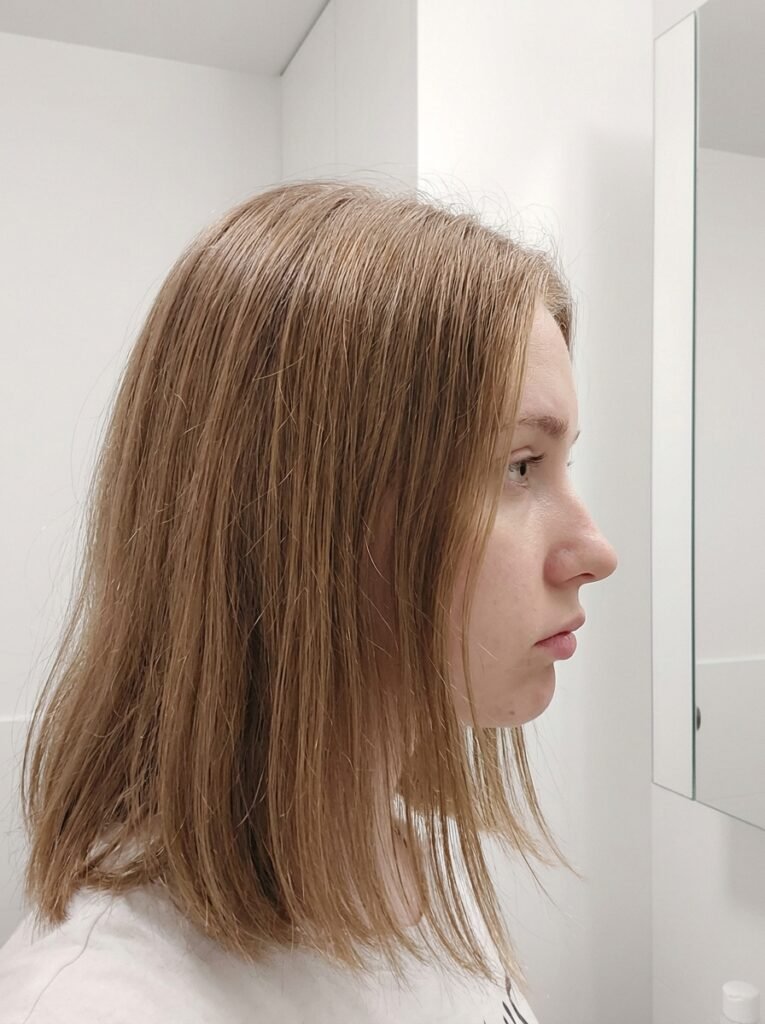
Fine hair refers to the width of each individual strand. Fine strands are skinny, soft, and light, which is why they collapse easily and struggle to hold a curl. Thin hair refers to density, meaning how many strands you actually have per square inch of scalp. You can have fine hair that is dense, coarse hair that is sparse, or, like many of us, hair that is both fine and on the thinner side.
Why does the distinction matter? Fine hair responds brilliantly to lightweight products and root-lifting tricks, because the strands themselves are easy to move. Lower density responds best to cuts that concentrate what you have, like blunt perimeters and strategic bangs. Most people benefit from a mix of both approaches, which is exactly what this guide covers.
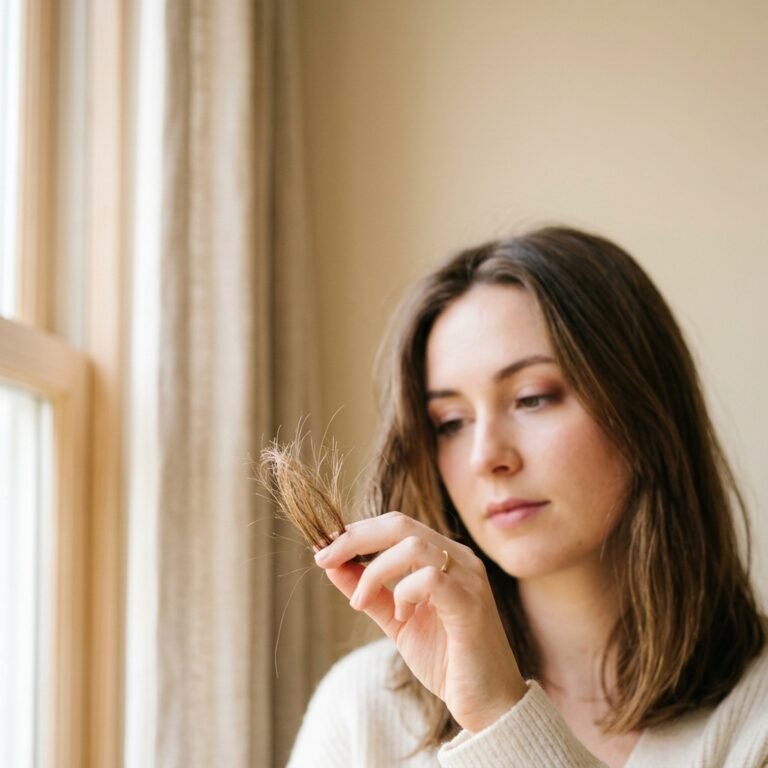
One honest note before we go further. If your hair has recently started shedding noticeably more than usual, that is worth a conversation with your doctor or a dermatologist first, since sudden thinning can have medical causes. This guide is about making the hair you have look its absolute fullest.

The Best Haircuts for Thin Hair That Craves Volume
A great cut does most of the heavy lifting, and for thin hair the guiding principle is simple. Keep weight where it creates fullness, remove it only where it creates movement, and never let your ends go sparse and see-through.

The Blunt Shoulder-Length Cut
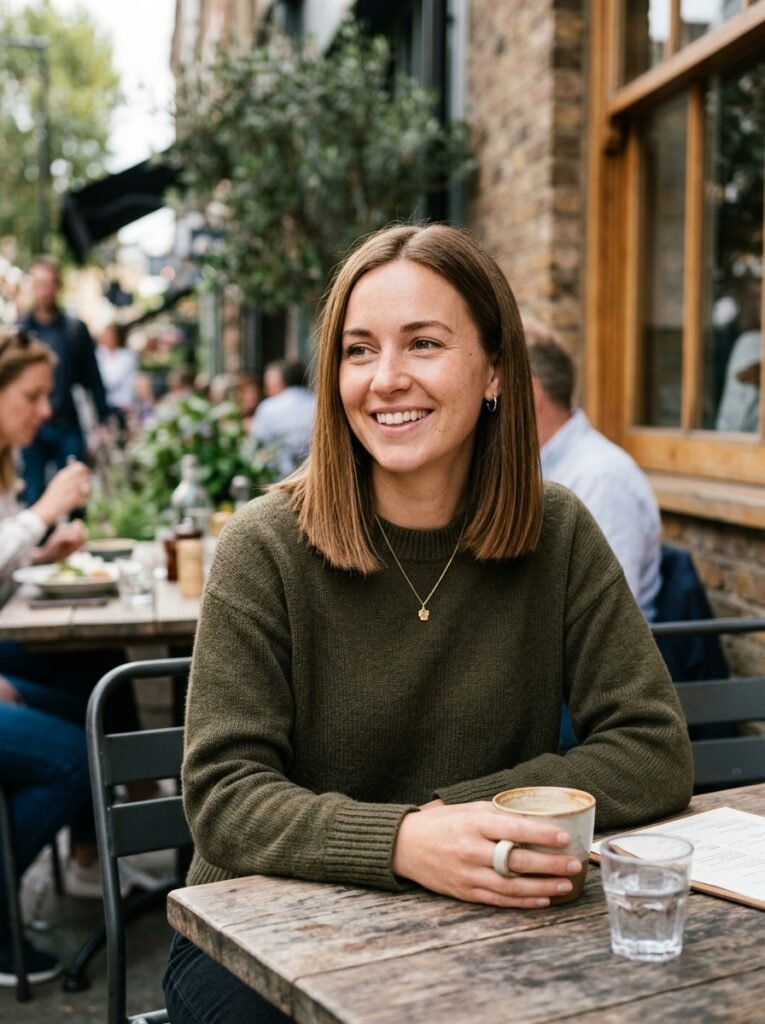
If volume is the goal, this is the cut to beat. A one-length blunt cut that lands between the chin and shoulders gathers every strand you have into a single strong line, and that dense perimeter is what reads as thickness. The eye judges fullness by the ends, so when the ends look solid, the whole head looks fuller. Keep it at the shoulders or above, since fine hair tends to run out of steam past that point. Styled sleek with a drop of smoothing serum, it looks intentional and expensive. Styled with a soft bend, it looks bouncy and full. Either way, it works with almost no effort.
The Layered Bob with Soft Internal Layers
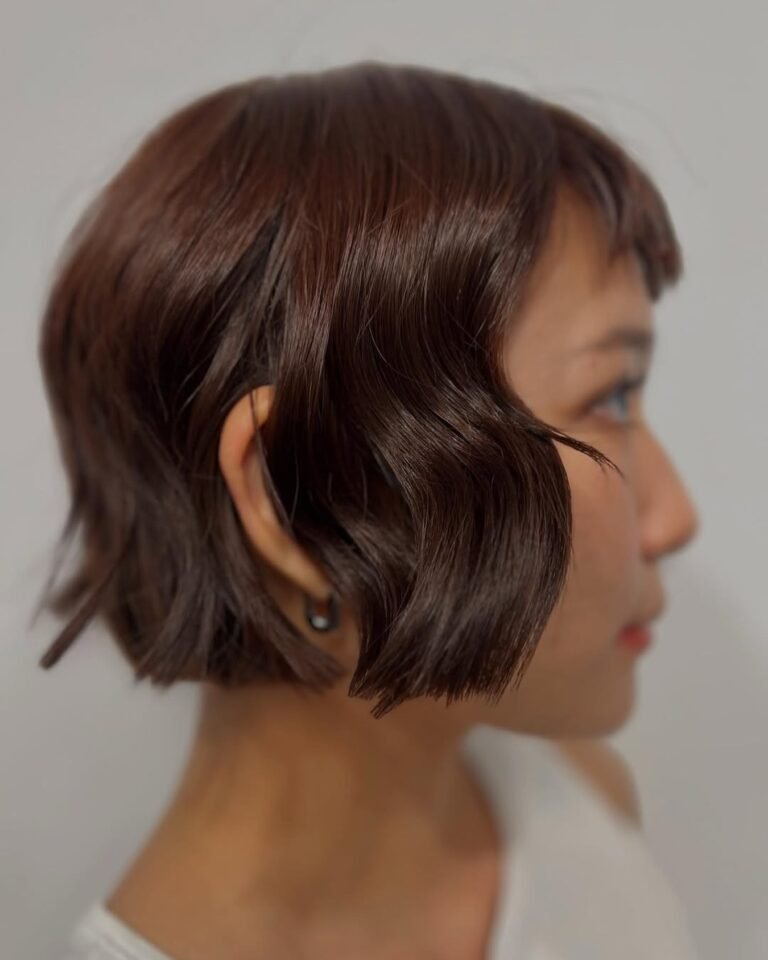
A bob with a few soft, hidden layers gives you the best of both worlds. The perimeter stays blunt and full, while subtle internal layers, sometimes called invisible layers, are tucked inside the shape to build lift at the crown and encourage bounce. The word to use with your stylist is subtle. You want two or three soft layers for movement, not a heavily shattered cut that thins out the very ends you are trying to protect. Blow dried with a round brush, this bob has the swing and body fine hair dreams about.

The Textured Pixie
Going short is the boldest move and often the most flattering one. A textured pixie removes the length that was dragging your hair flat, and suddenly the volume you could never build at the ends appears effortlessly on top. Ask for choppy, piecey layers through the crown with softer edges around the ears and neckline. A fingertip of light styling paste or a puff of texture spray gives fine hair grit and separation. Pixies also make thin hair genuinely low maintenance, because there is simply less hair available to fall flat.

Curtain Bangs and Face-Framing Pieces
Bangs are an underrated density trick. A soft curtain fringe concentrates hair at the front of the face, which is exactly where people look first, creating an instant impression of fullness. Curtain bangs suit thin hair especially well because they blend into the lengths and can be cut from slightly deeper within the head, borrowing a little hair from behind the hairline to fill out the front. Pair them with gentle face-framing pieces and even a simple ponytail suddenly looks fuller and more finished.

What About Keeping Your Hair Long
You can keep length with thin hair, but be honest about the trade. Long fine hair carries weight that pulls the roots flat, and ends that have thinned over years of growing can look wispy and transparent. If long hair is non-negotiable, keep it at or just past the collarbone, book regular micro-trims to keep the ends strong, and ask for the lightest possible face framing rather than layers throughout. Healthy, well-maintained length can absolutely work. Struggling, see-through length never does.

Styling Tricks That Create Instant Volume
The right cut sets the stage, but styling is where the volume actually happens, and a handful of stylist tricks make a dramatic difference.
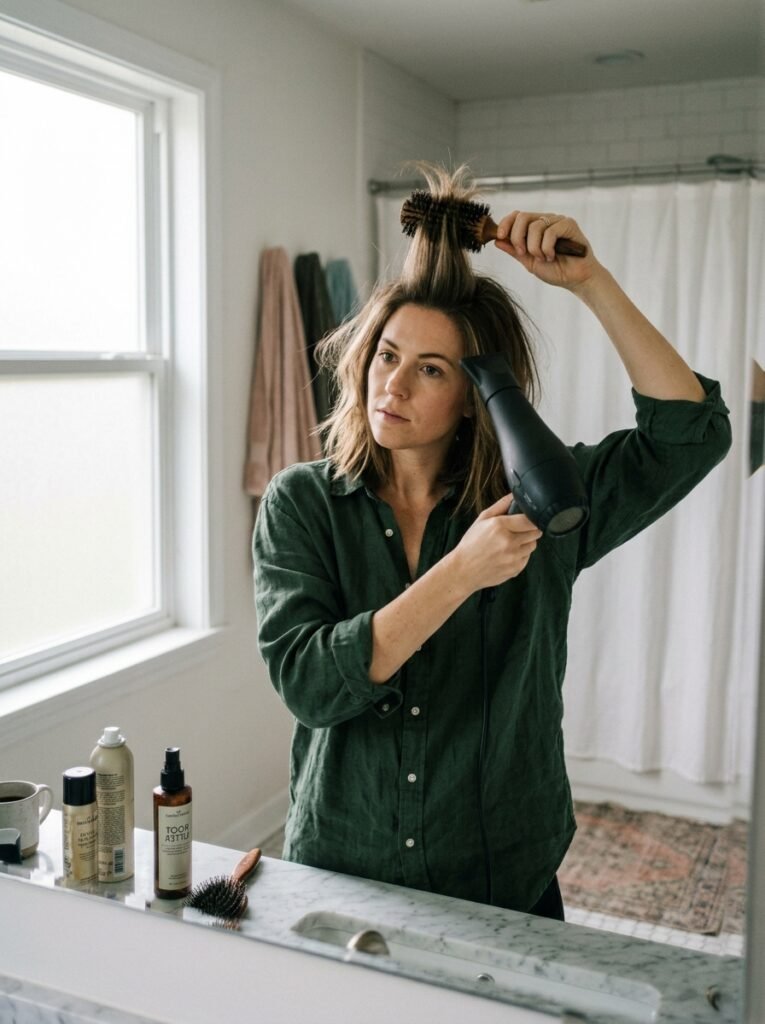
Start with the blow dry, because volume is built at the root while hair is damp. Flip your head upside down and rough dry the roots first, or dry them in the opposite direction to the way they naturally fall. When hair is nearly dry, lift sections at the crown with a round brush, aim the airflow at the root, and hit each section with the cool shot button before letting go. Cool air is what sets the lift in place. If round brushes and dryers feel like juggling, a heated blow-dry brush combines tension and airflow in one tool and makes root lift far easier.
Velcro rollers are the old-school secret that still beats almost everything. Pop two or three large rollers into the crown while your hair is warm from the dryer, do your makeup, then release. The lift lasts for hours.
Switching your part is free and instant. Hair trained to one side for years lies flat there, so flipping the part to the other side gives immediate height at the root.
For staying power, lightly backcomb one or two sections at the crown and smooth the top layer over them, then mist dry shampoo or texture spray at the roots. Fine hair is often too soft and slippery to hold volume, and a little grit gives it something to grip.
Once you are done, resist the urge to brush everything smooth, because brushing pulls out the very lift you just built. Rake through gently with your fingers instead.
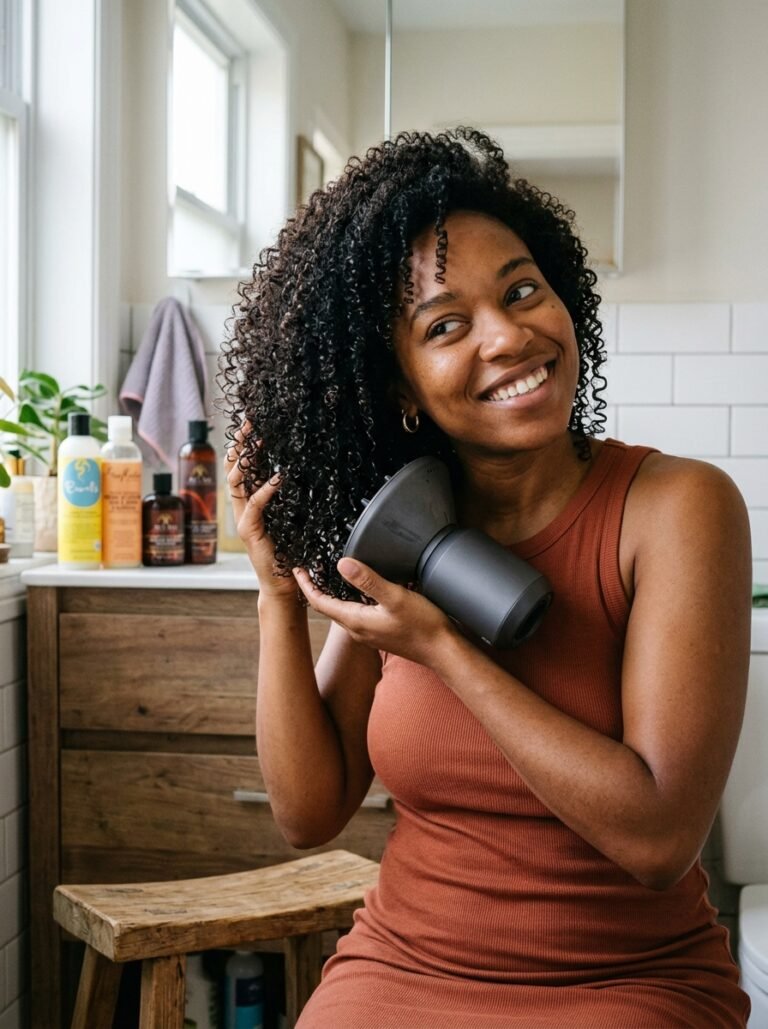
And if you have any natural wave, use it. Scrunch in a light mousse and diffuse rather than blow drying straight, because texture always looks fuller than flatness. Prefer to skip heat entirely? Loose braids or foam rollers on almost-dry hair overnight deliver soft, volume-friendly waves by morning.
Volumizing Products That Actually Work
Thin hair does not need more product. It needs the right product in the right place, in smaller amounts than you think.
In the shower, use a lightweight volumizing shampoo and keep conditioner strictly from the mid-lengths to the ends. Conditioner at the roots is the single most common self-inflicted flatness there is. Once every week or two, swap in a clarifying shampoo to strip away the buildup that quietly weighs fine hair down.
On damp hair, a golf-ball-sized puff of mousse or a few spritzes of root-lifting spray applied only at the roots gives your blow dry something to build on. Thickening sprays that coat each strand can genuinely make hair feel denser, just use them sparingly. If your ends need moisture, a lightweight spray leave-in gives them a drink without the weight of a cream.
On dry hair, dry shampoo and texture spray are your best friends, adding grip and lift between washes. What to avoid matters just as much. Heavy oils, rich butters, and thick masks belong nowhere near your roots, and most fine hair is better off skipping them entirely from the ears up.
Practical Everyday Habits for Fuller-Looking Hair
Small daily habits decide whether your volume survives the week.
- Rinse conditioner thoroughly, since leftover residue flattens fine hair faster than any weather can.
- Sleep on a silk or satin pillowcase with your hair in a loose, high twist to protect the volume you built.
- Book a small trim every eight to ten weeks so your ends stay strong and dense rather than wispy.
- Handle wet hair gently with a wide-tooth comb, because fine strands snap easily when soaked.
- Give tight, high-tension ponytails a regular rest, since constant pulling stresses the hairline over time.
- Wash when your roots need it. Oily roots flatten fine hair quickly, so find the rhythm that keeps them fresh.
None of these takes more than a minute, and together they protect every bit of fullness your cut and styling create.
Common Mistakes That Flatten Fine Hair
Most flat hair traces back to a few extremely common missteps.
The biggest is holding onto too much length. Long hair is heavy, and weight is the natural enemy of volume, so hair that falls far past the shoulders will almost always pull itself flat no matter how well you style it.
Over-layering comes next. Aggressive layers, razoring, and thinning shears remove bulk from hair that has none to spare, leaving the ends stringy instead of full. If a stylist reaches for thinning shears on your fine hair, it is completely fair to ask why.
Product overload is the quiet one. Doubling the mousse does not double the volume, it just adds weight, and so does applying anything rich near the roots.
Then there is the flat iron habit. Ironing every strand poker straight removes the bend and texture that make hair look thick, leaving it glued to your head by afternoon.
And finally, skipping trims. Thin ends split and taper, and tapered ends are exactly what make fine hair look sparse in photos. Regular tiny trims keep the perimeter looking dense.
What Stylists Wish Every Fine-Haired Client Knew
Spend time around stylists who specialize in fine hair and the same advice keeps surfacing.
Fullness is an illusion built at the perimeter. A strong, blunt line at the ends convinces the eye there is more hair than there really is, which is why the cut matters more than any product you can buy.
Color counts as a volume tool. Highlights and even a single-process tint gently swell the hair shaft and add grip, while the dimension of multi-tonal color reads as depth and density to the eye.
Volume lives at the root, so spend your styling minutes there. Perfectly styled lengths sitting on flat roots will always look thin, while lifted roots make even the simplest style look full.
And texture is your friend, not your enemy. A soft bend, a loose wave, a little grit. Fine hair styled with some imperfection almost always looks thicker than fine hair styled perfectly sleek.
Frequently Asked Questions
What is the best haircut for thin hair?
A blunt cut between the chin and shoulders is widely considered the best haircut for thin hair, because the strong one-length perimeter makes the ends look dense and full. A bob with soft internal layers is a close second if you want more movement.
Does short hair make thin hair look thicker?
Usually, yes. Shorter cuts remove the weight that pulls fine hair flat and gather your density into a fuller shape. Chin to shoulder length is the sweet spot for most people, while a textured pixie works beautifully if you want maximum lift on top.
How can I add volume to thin hair without heat?
Switch your part to the opposite side for instant root lift, use dry shampoo at the roots for grip, and sleep in loose braids or foam rollers for heatless waves. A gentle backcomb at the crown, smoothed over, adds lasting height with zero heat.
Should thin hair have layers?
Yes, but only subtle ones. A few soft internal or face-framing layers add movement and lift without sacrificing fullness. Heavy, shattered layering removes bulk that thin hair cannot afford to lose and leaves the ends looking stringy.
Does coloring your hair make it look thicker?
It genuinely can. Color and highlights slightly swell each strand and roughen the cuticle, which adds grip and body, while dimensional color creates shadow and brightness that read as fullness. Just balance it with good conditioning from the mid-lengths down.
Final Thoughts
Thin hair is not a life sentence of flatness. It is simply hair that rewards strategy. Choose a cut that keeps your perimeter strong, build your volume at the roots while your hair is damp, keep heavy products away from your scalp, and protect it all with a few tiny daily habits.
Start with whichever change feels easiest. Flip your part tomorrow morning. Book the blunt collarbone cut you have been considering. Move your conditioner down to your ends tonight. Each small shift stacks on the last, and within a few weeks the difference is real and visible.
Fine hair will never behave like thick hair, and it does not need to. Styled with the right tricks, it can look every bit as full, bouncy, and healthy. Big volume was never out of reach. Now you know exactly where to find it.