Hair Porosity Test: How to Find Yours and Why It Matters
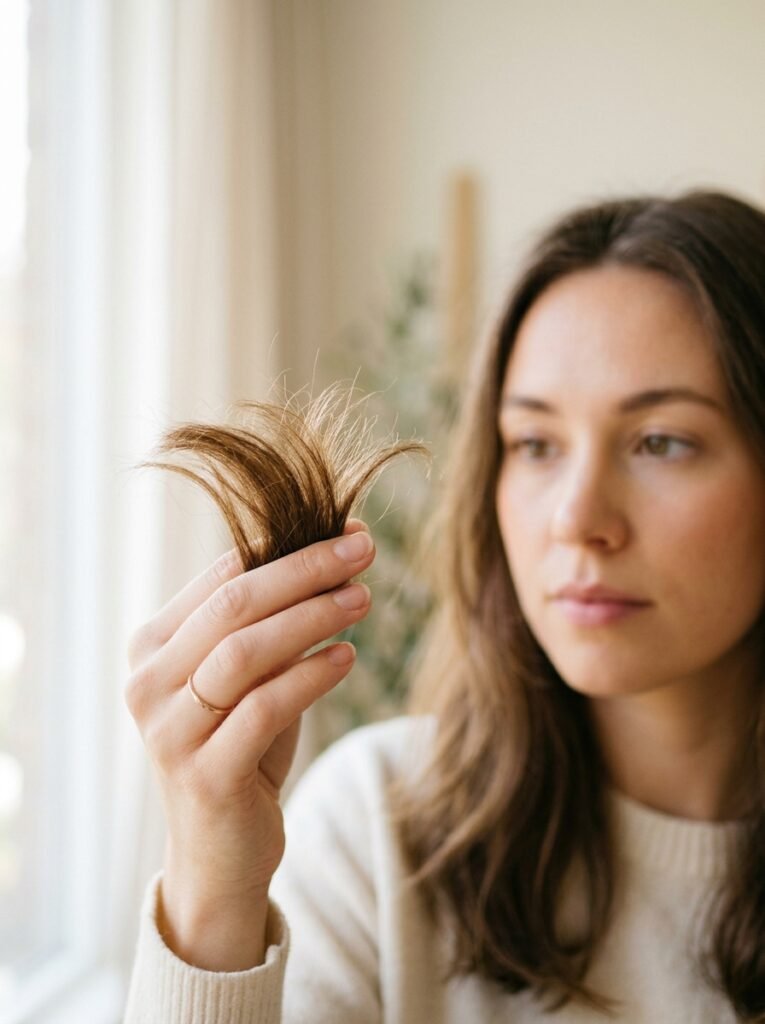
I did the glass of water test three times in one evening.
First strand sank. Second strand floated on the surface like it had somewhere better to be. Third one hovered halfway down and stayed there, refusing to commit, which according to every chart I’d read meant I had perfectly normal hair, except the first strand had already told me I had high porosity and the second had told me the opposite.
So I sat there with a glass of increasingly hairy water and concluded that either my hair was broken or the test was.
It was the test.
That glass of water thing is easily the most repeated hair tip on the internet, and it doesn’t work reliably. Which is a shame, because porosity itself is genuinely useful to understand. It explains why your conditioner does nothing, why your hair takes two hours to dry when your sister’s takes twenty minutes, and why that expensive oil everyone raves about just sat on top of your head looking greasy.
There are better ways to work it out. None of them involve a glass.
Why the Float Test Keeps Giving People Different Answers
Worth understanding what’s actually going wrong, because otherwise you’ll be tempted to try it again.
Water has surface tension. A single hair is very light. That combination means a clean, dry strand will often sit on the surface regardless of what its cuticle is doing, simply because it isn’t heavy enough to break through.
Then there’s residue. Any leftover conditioner, oil, silicone, styling cream or even natural scalp oil makes a strand water repellent. A high porosity hair with a bit of product on it will float happily. A squeaky clean low porosity hair might sink because there’s nothing on it to repel the water.
Add in the variables nobody controls for. How you dropped it. Whether you nudged the glass. How long you waited, since almost anything sinks eventually. Whether the strand came from your roots or your ends, which can genuinely differ.
The result is a test that produces confident looking answers from essentially random inputs. If you’ve done it and got a result that didn’t match your experience of your own hair, trust your experience.
So What Is Porosity, Really
Strip away the jargon and it’s one idea.
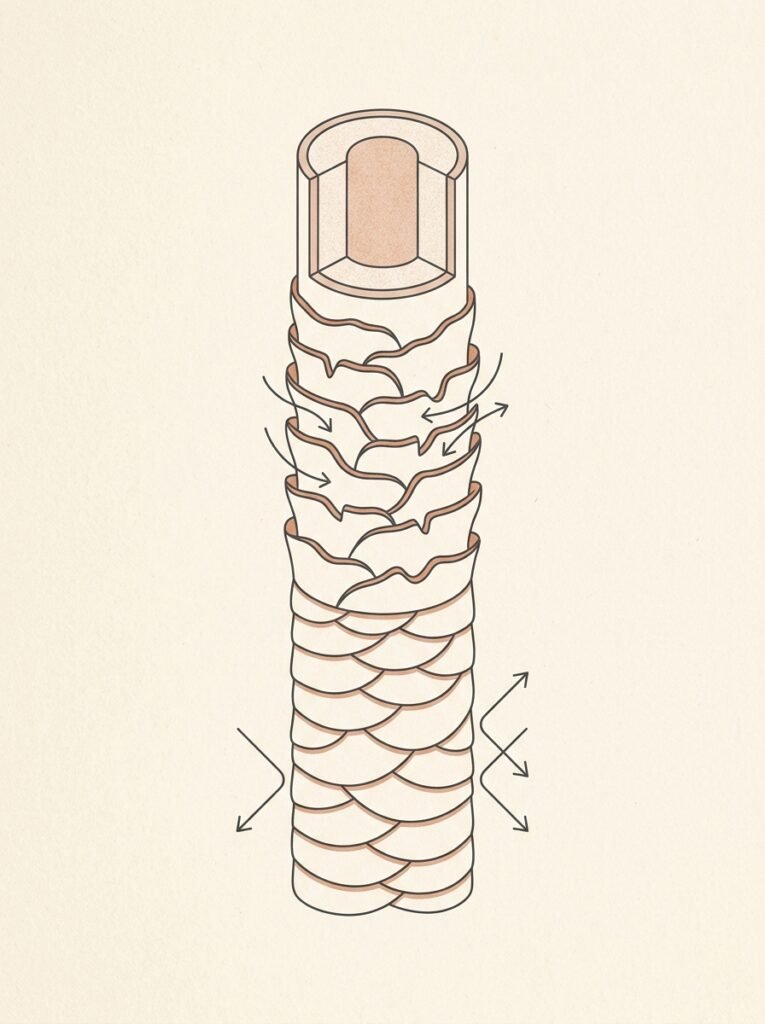
Every hair strand has an outer layer made of overlapping scales, a bit like roof tiles. That layer is the cuticle. Porosity is simply how tightly those scales sit against each other, and therefore how easily water and product get in and out.
Scales lying flat and tight means low porosity. Water struggles to get in, and once it’s in it struggles to leave.
Scales raised, gappy or damaged means high porosity. Water rushes in and rushes straight back out again.
Somewhere in between is medium porosity, which is the least demanding to look after and which most people with undamaged hair fall into.
That’s it. There’s no hierarchy here, no porosity that’s better than another. They’re just different behaviours that need different handling, and knowing which one you’re dealing with saves you buying products designed for the opposite problem.
One thing that’s often left out: porosity has as much to do with condition as genetics. Bleaching, permanent colour, heat styling, chemical straightening and years of sun exposure all lift and damage the cuticle. Which is why the ends of long hair are frequently higher porosity than the roots, even though it’s all the same head.
Four Signals That Tell You More Than a Glass Ever Will
These are behavioural rather than experimental, which is exactly why they’re more reliable. You’re observing what your hair actually does over time instead of hoping one strand behaves representatively in a cup.
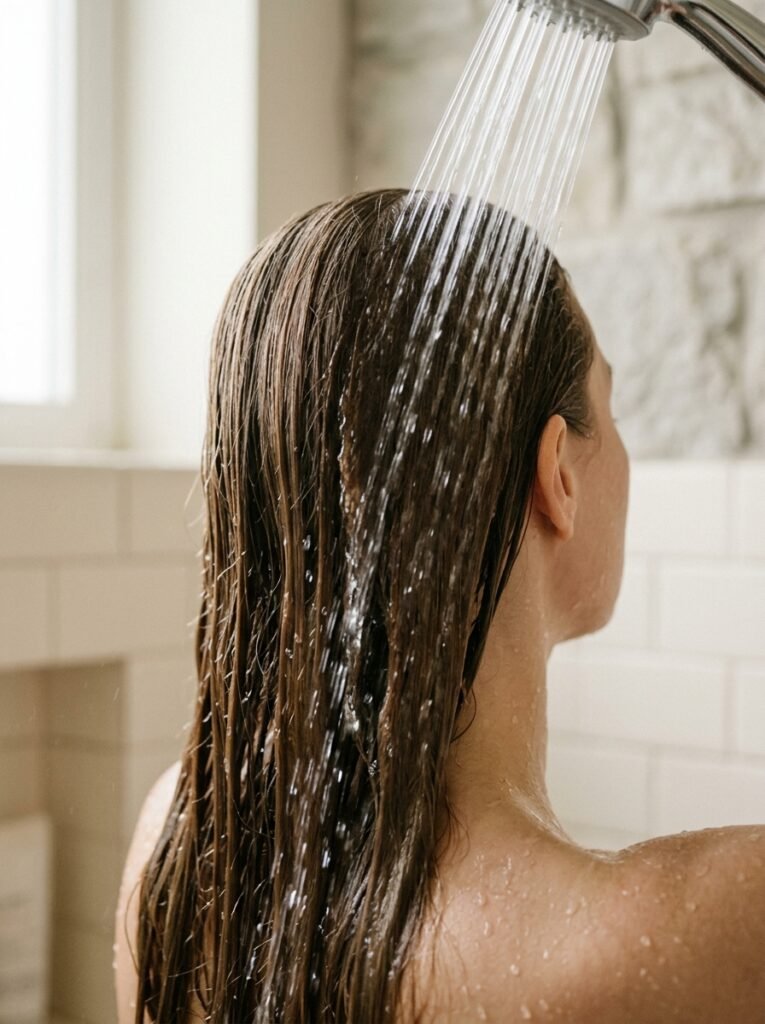
How long it takes to get wet. Next time you’re in the shower, pay attention. Does water soak straight in within a few seconds, or do you find yourself standing there working it through, feeling like the water is beading and running off the outside? Hair that resists getting wet is telling you the cuticle is closed tight. That’s low porosity. Hair that saturates almost instantly is high.
How long it takes to dry. This is probably the single most telling one. Low porosity hair holds onto water stubbornly and can take hours to air dry, often feeling damp at the roots long after the ends are done. High porosity hair dries fast, sometimes surprisingly fast, because moisture leaves as easily as it arrived. Medium sits in between and dries at a fairly unremarkable pace.
The strand slide. Take a single hair, hold it at the bottom, and run your fingers up it toward the root. Smooth and slippery the whole way means the cuticle is lying flat, so lower porosity. If it feels rough, catchy or slightly bumpy, those are raised scales and you’re higher porosity. Try it on a hair from near your scalp and one from your ends and compare, because the difference between them is informative on its own.
How products behave. Low porosity hair tends to have product sit on the surface. Conditioner feels like it’s coating rather than sinking in, oils leave a greasy film, and buildup happens fast so hair goes limp and dull between washes. High porosity hair drinks everything up immediately and then feels dry again within hours, which is the frustrating one, because it looks like the product vanished and did nothing.
If you want a quick supplementary check, mist a small section of clean dry hair with a spray bottle. Water sitting in visible beads on the surface for a few seconds points to low porosity. Water disappearing on contact points to high. It’s not definitive, but combined with the four above it helps.
Putting the Answers Together
Look at your four observations and see which column most of them fall into. You don’t need all four to agree.
Low porosity looks like: hair takes ages to wet in the shower, takes forever to dry, feels smooth along the strand, products sit on top, buildup is a regular problem, and deep conditioners never seem to do much.
Medium porosity looks like: hair wets and dries at an ordinary pace, holds styles reasonably, takes colour predictably, and generally doesn’t cause you much trouble. If you’ve never thought about any of this, you’re probably here.
High porosity looks like: hair soaks up water instantly, dries quickly, feels rough running your fingers up the strand, tangles easily, frizzes readily, absorbs product and still feels dry, and colour fades faster than you’d like.
If you’re getting a genuinely mixed picture, check whether it splits by location. Smooth low porosity roots with rough high porosity ends is extremely common, especially with any length or colour history, and it means you may want to treat the two areas slightly differently rather than picking one answer for your whole head.
My cousin spent about two years convinced she was high porosity and buying accordingly, because her hair was frizzy, tangled constantly and felt permanently dry. Heavy creams and butters everywhere. It kept getting flatter and greasier at the roots while the ends stayed exactly as thirsty as before.
She was low porosity at the scalp and high porosity from the ears down, after four years of highlights. Once she switched to a lightweight leave in at the top and kept the rich stuff for the mid lengths and ends, both halves settled within a couple of weeks. Same head, two different answers, and the one size approach had been quietly failing both.
If You Come Out Low Porosity
The core problem is getting moisture in past a closed cuticle. Almost everything useful comes from that.
Warmth is your friend. Warm water in the shower rather than cold, and applying conditioner or a mask while the bathroom is still steamy. Heat encourages the cuticle to lift slightly, which lets product in. A warm towel wrapped over a deep conditioner for fifteen minutes does more than doubling the amount of product.
Go lighter with products. Thick butters, heavy creams and dense oils will mostly sit on the surface and weigh things down. Lightweight leave-ins, watery serums and liquid based products get further in.
Clarify regularly. Buildup is the recurring low porosity headache. A clarifying wash every couple of weeks resets things and makes everything else work better.
Apply to damp, not soaking, hair. If the hair is already saturated there’s no room left for anything else to get in.
Ease off protein. Low porosity hair is often protein sensitive and can go stiff or straw-like with too much. Moisture is generally the priority.

If You Come Out High Porosity
Here the problem reverses. Getting moisture in is easy. Keeping it there is the challenge.
Seal after you moisturise. This is where heavier products earn their place. A cream or oil applied over a leave in helps hold the moisture in rather than letting it evaporate. Layering in that order matters more than the specific products.
Protein is often welcome. Damaged cuticles have gaps, and protein treatments can temporarily fill them and smooth the strand. Once every few weeks is plenty. Overdoing it swings you into brittleness, so watch how your hair responds.
Finish cooler. A cool rinse at the end of a shower helps the cuticle lie flatter, which reduces frizz and slows moisture loss.
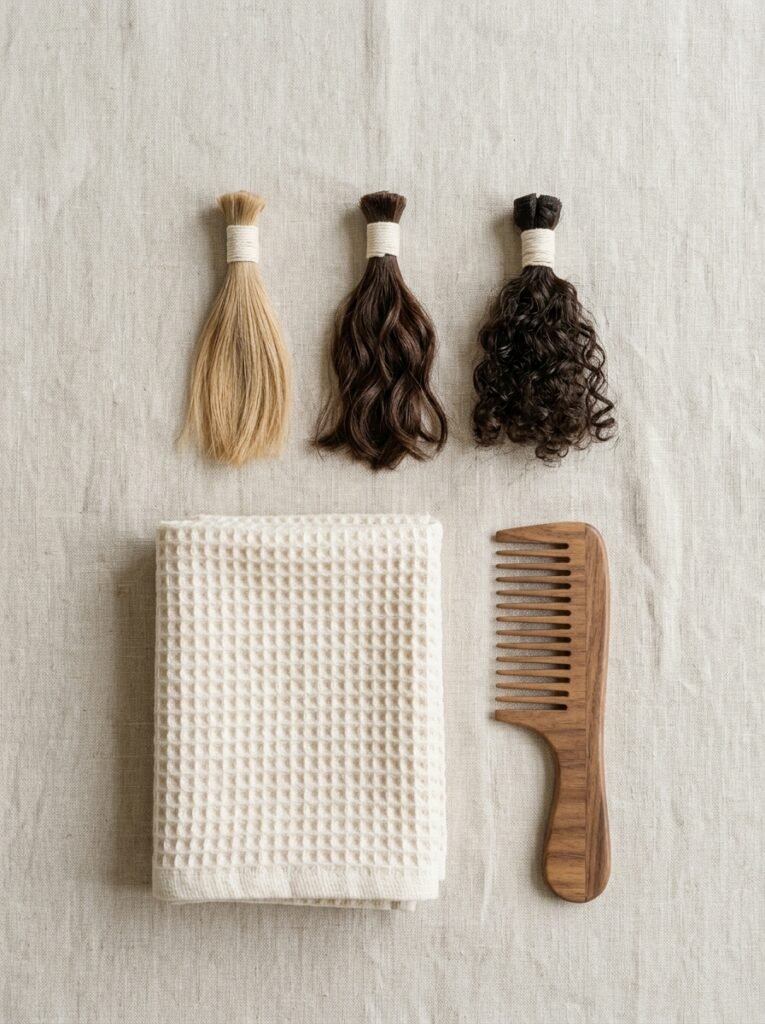
Be gentler than feels necessary. High porosity is usually damage related, and continuing the damage keeps you there. Lower heat settings, always a heat protectant, a microfibre towel instead of a rough one, and a wide tooth comb on wet hair.
Leave in conditioner, most days. Not just on wash day. High porosity hair loses moisture continuously, so topping it up between washes helps.
If your hair is curly on top of any of this, porosity and curl pattern interact quite a bit, and the order you apply things on wash day matters more than it does for straight hair. There’s a full walkthrough of building a wash day routine for curls that covers the sequencing side properly.

What Most Porosity Advice Gets Wrong
Here’s where I’d push back a little on the way this topic usually gets presented.
Porosity is frequently framed as a fixed identity, like a blood type. You find out you’re low porosity, you join the low porosity camp, and you buy from the low porosity shelf forever.
It doesn’t work like that.
Porosity is a spectrum, not three boxes, and it shifts. Bleach your hair and it will move higher. Cut off damaged ends and grow out healthy hair and it moves back down. Spend a summer in strong sun and it drifts up again. Your hair from two years ago may not be behaving the same way as your hair today.
It also varies along a single strand, which is why the “my roots and ends feel completely different” experience is so common and so rarely addressed.
And honestly, it’s one input among several. Hair texture, density, curl pattern, scalp condition and how much heat you use all matter too. Porosity helps explain why a product isn’t working. It doesn’t dictate a rigid regimen you’re locked into.
Use it as a lens, not a rulebook. If a product works brilliantly for you and the internet says it shouldn’t given your porosity, the product is right and the internet is wrong.

Things People Wonder About
Can my porosity change?
Yes, and it does. Damage raises it, growing out healthier hair lowers it. It’s worth reassessing every year or so, and definitely after any big colour or chemical change.
Is low porosity bad for my hair?
Not at all. Low porosity hair is often quite healthy, since a tight cuticle usually means an intact one. It just needs a different approach, mostly around getting product to penetrate.
Do I actually need protein treatments?
Depends entirely on your porosity and how your hair responds. High porosity hair often benefits. Low porosity hair often doesn’t and can react badly. If your hair feels stiff, brittle or straw-like after a treatment, that’s a protein overload signal and you should back off.
Can different parts of my hair have different porosity?
Very commonly, yes. Roots are usually lower porosity than ends because the ends have lived through more heat, colour and sun. Treating your ends more richly than your roots is a reasonable response rather than an overcomplication.
Does porosity have anything to do with curl type?
They’re separate things, though curly hair is somewhat more likely to be higher porosity because the twists in the strand mean the cuticle doesn’t lie perfectly flat. But you can absolutely have low porosity curls or high porosity straight hair.
Do I need to buy products labelled for my porosity?
Not necessarily. The label is marketing more often than not. What matters is the actual weight and formulation, and understanding your porosity lets you judge that for yourself regardless of what the front of the bottle says.
How often should I retest?
Once a year is plenty for most people, or after any significant change like going blonde, chopping off damaged length, or starting to use heat much more or much less.

Worth Knowing, Not Worth Obsessing Over
The genuine value in all this is that it stops the guessing.
If you know your hair resists moisture, you stop buying rich masks that never sink in and wondering what you’re doing wrong. If you know it loses moisture fast, you stop being confused about why it feels dry six hours after conditioning it.
That’s the whole benefit. Fewer wasted purchases, and a reason behind what your hair has been doing all along.
Spend ten minutes noticing how yours behaves in the shower this week. Skip the glass of water. You’ll learn considerably more.